

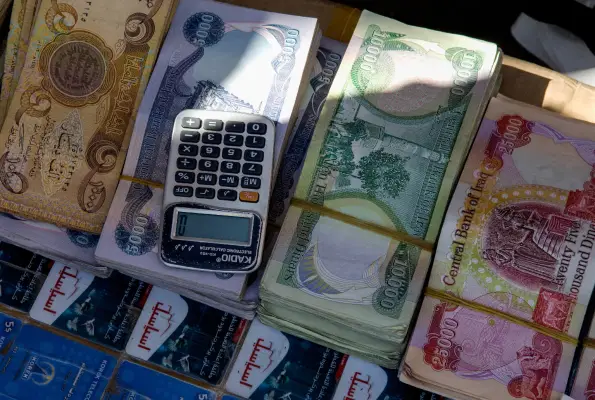
While Riyadh builds a digital entertainment empire, Baghdad is engaged in a far grittier struggle for digital control. In 2025, the Iraqi economy underwent a transformation that can only be described as “shock therapy.” The aggressive enforcement of “Digital Payment Regulation No 2” has turned the simple act of buying gasoline or paying a traffic fine into a frontline battle between the state’s modernisation agenda and a population deeply entrenched in a cash economy.
For decades, cash was king in Iraq. Trust in the banking sector was non-existent, eroded by wars, sanctions, and the 2014 financial crisis. The “shadow economy,” fuelled by physical dollars and dinars, was estimated to encompass billions of dollars, effectively invisible to the state. The 2025 mandate was designed to drag this shadow economy into the light, using the point-of-sale terminal as the primary weapon.
Regulation Number Two
The Central Bank of Iraq issued the “Electronic Payment Services Regulation No. 2 of 2024,” which came into full effect in 2025. This regulation replaced the outdated 2014 framework and established a strict legal mandate for digital payments. The directive was absolute. Government institutions and public facilities were to phase out cash payments entirely by July 2026, with strict milestones set for 2025.
The tip of the spear was the fuel distribution network. The Ministry of Oil’s “Products Distribution Company” set hard deadlines, and by mid-2025, gas stations across Baghdad began refusing cash. This was a calculated move. Fuel is a universal commodity; by digitising fuel payments, the state forces virtually every vehicle owner in the country to interact with the banking system.
The transition has been chaotic, revealing the deep disconnect between regulatory ambition and social reality. The primary friction point is the “trust gap.” A vast portion of the Iraqi population remains unbanked, viewing banks as “risky institutions” liable to freeze funds or collapse.
This distrust, combined with the mandate, has birthed a bizarre secondary market, the “rented card.” Citizens who need to pay for government services or fuel but lack a digital payment method are forced to “rent” cards from brokers lurking outside offices and gas stations. These intermediaries charge a premium, often thousands of dinars, to swipe their own card on behalf of the customer.
In some cases, the fee for renting a card to complete a transaction can be as high as 10,000 dinars (approximately $8), with additional surcharges for “deposit handling.” This practice transforms the digital payment system from a tool of efficiency into a tool of exploitation.
The cash still flows, but now it flows through a gatekeeper who extracts a rent. Government departments have attempted to crack down by requiring personal guarantees or holding ID cards, but the black market adapts faster than the regulators.
The forced digitisation has also exposed a population with low “security awareness” to sophisticated fraud. Stories abound of citizens handing over their PIN codes to agents to facilitate payments, only to have their accounts drained. One report details a government employee who gave her PIN to an agent to withdraw her salary, only to be told the card was empty, until she threatened police action.
More alarming is the rise of organised crime rings utilising the new digital infrastructure. In 2025, Iraqi security forces dismantled a network in Baghdad’s Karkh district in possession of 500 digital payment cards. These “ghost cards” were being used to smuggle money out of the country.
Criminal networks load the cards with Iraqi dinars, transport them to jurisdictions like the UAE or Turkey, and withdraw funds in US dollars at the official exchange rate, engaging in arbitrage against the parallel market rate.
This “dollarisation” of the scam reveals the complexity of the CBI’s task. The digital rails intended to prevent money laundering are, in the short term, being weaponised to facilitate it, requiring a constant cat-and-mouse game between the “Federal Intelligence Agency” and the smuggling rings.
The friction is most palpable in the daily interactions of the working class. Taxi drivers, historically reliant on cash tips and the “rounding up” of fares, are finding themselves squeezed. Digital payments are exact without loose change to keep. Drivers report confusion over payment terminals and a loss of income due to the sanitisation of the transaction.
Similarly, gas station attendants who relied on small cash tips from drivers are facing a significant income drop. The POS device does not have a “tip” button. The digitisation of the transaction has stripped away the informal social contract of tipping that kept low-wage workers afloat. Workers like Mohamed Ali, a 33-year-old gas station attendant, fear that the rise of automation and digital payments will eventually lead to layoffs, as the human element becomes less necessary for the transaction.
Killing The Shadow Economy
Despite the chaos, the anecdotes of scams, and the resistance from the street, the government’s logic appears to be holding. The CBI’s “shock therapy” is working by the only metric that matters to the state, i.e., volume.
In the first quarter of 2025 alone, Rafidain Bank reported electronic payment settlements for government institutions totalling 2.65 trillion dinars ($2 billion), a staggering 244% increase from the previous year. Fuel payment volume exceeded $566 million in January 2025.
This massive influx of liquidity into the formal banking system is the “dividend” of the shock therapy. It reduces the liquidity available for the black market and stabilises the demand for the US dollar. By forcing transactions onto digital rails (specifically the ISO 20022 standard), the state gains visibility into where money is moving. The “Cashless” push is effectively a tax on the informal sector, extracting value previously lost to the shadow economy and channelling it into the state-controlled banking system.
Coercion As Modernisation
Can you force-digitise an economy that runs on informal trust? The answer from Baghdad in 2025 is “yes, but at a high social cost.” The transition is coercive. The state has decided that the benefits of financial transparency and currency stability outweigh the costs of short-term chaos and the alienation of the unbanked poor.
The “rented card” phenomenon is a temporary aberration, a symptom of a society adapting to a new reality. As digital wallets become more ubiquitous and the “trust gap” slowly narrows, perhaps through the brute force of necessity, the shadow economy will shrink. But for now, the modernisation of Iraq is being bought with the frustration of the taxi driver and the confusion of the pensioner, forced to navigate a digital world they neither trust nor understand.