

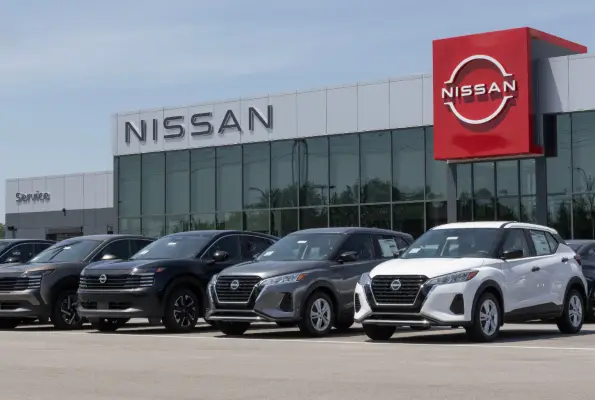
Japanese carmaker Nissan has rung the panic bell, stating that it could be forced to close its plant in the United Kingdom’s Sunderland, if the European country is not fully included in new “Made in Europe” manufacturing rules proposed by the European Union (EU).
According to the new EU rules, strategic sectors including cars, green tech and steel, under the Industrial Accelerator Act (IAA), will receive help, in order to compete against their counterparts, mostly industries from abroad, that do not face the continent’s strict regulations and higher energy prices. For the electric vehicle sector, the industry will be entitled to public subsidies to speed up the development of cars being made in European plants.
While the new rules, announced by the EU industrial strategy commissioner, Stephane Sejourne, has been designed to protect the bloc from cheap competition from China’s expansionist trade policies, Nissan, along with Society of Motor Manufacturers and Traders, the British trade representative group, expressed their “grave concerns” about the proposals, which they said could damage the 70 billion pound annual cross-channel trade between EU and its former member-state.
According to the latest reports, Nissan has privately warned the Keir Starmer government that it could be forced to close its operations in the British mainland if the EU proposals become law. As per another unnamed industry executive, who interacted with the Financial Times, the Japanese automaker could face “an existential threat if it was frozen out of access to EU incentives.” Nissan’s Sunderland site is the largest car factory in Europe, employing 6,000 people and capable of producing 600,000 cars annually.
“Nissan refused to comment on the reports, but a source indicated that while the carmaker had not threatened to close the factory, it was fair to say it had concerns about the rules concerning procurement of corporate fleets and small EVs locking UK-based companies out,” stated a Guardian report.
Emphasising that any attempt to prioritise EU-made products to accelerate green tech must include trusted British partners, Mike Hawes, the CEO of the Society of Motor Manufacturers and Traders, said, “The UK automotive sector is gravely concerned by the ‘Made in Europe’ proposals set out in the European Commission’s Industrial Accelerator Act. As drafted, it would discriminate against UK-made vehicles and components, damaging a trading relationship worth almost 70 billion pounds annually.”
He further expressed his apprehensions about the IAA effectively putting UK manufacturers at a systemic competitive disadvantage in the EU market, with the proposals, in their current shape, may also be in breach of the EU-UK trade cooperation agreement, formed under the Brexit deal.
But why has there been so much panic in the British automobile sector? The answer lies in the third annex of the EU proposal, which shows a roadmap of corporate fleets, accounting for the majority of car sales (also being fed into the second-hand car market), that can benefit from public subsidy. The requirement for them to be assembled in the EU member-states could rule British cars out of that market, with the latter being ineligible for subsidies.
Among the member states, the German car industry body, the VDA, has also raised concerns, saying the protective measures included in the proposal could raise costs, while giving motivation to other countries with their countermeasures, thereby tanking the EU’s export prospects.
“In its current form, the IAA will not be able to significantly strengthen the competitiveness of the industry in Germany and Europe. Its industrial policy impact will unfortunately be extremely limited,” VDA president Hildegard Müller said.
Hawes called on the Starmer administration and its European counterparts to work together to urgently resolve the situation by extending “full trusted partner status to the UK auto sector.”
A spokesperson for Nissan told the Guardian, “A simple solution would be to apply the equivalent of Union origin rules across all types of EV support, which would be in line with the EU’s goal of making regulations easier to understand and apply.”
However, the British government has reportedly started its communication channel with the country’s automobile industry. Business Secretary Peter Kyle, on the other hand, visited Brussels recently to make the case for the United Kingdom to be included as a full partner in the “Made in Europe” initiative.