

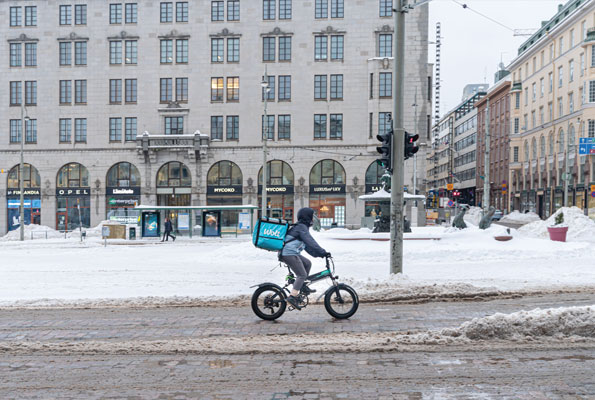
Finland has ranked at the top of the World Happiness Report for almost a decade, in part due to high levels of trust, social cohesion, strong public services and civic stability. However, today, this Nordic success story is facing a sobering economic challenge. A sharp rise in unemployment that has policymakers, businesses and everyday Finns asking how a nation known for well-being could be facing such a stark crisis at the labour market core.
Finland had an unemployment rate of approximately 10.6% at the end of 2025, which was higher than that of Spain and the highest jobless rate in the European Union (the euro area average was 6.2%). The numbers are very grim. Despite improvements in overall EU employment, unemployment has risen over the past two years.
For many Finns, especially the young and older workers, secure employment, once a cornerstone of Nordic life, appears increasingly elusive. This dramatic increase in unemployment is causing considerable anxiety, despite data indicating that Finland remains a high performer in terms of societal happiness.
Finland’s struggling job market
For nine consecutive years, Finland has been the happiest country in the world. However, if you walk into any small town outside Helsinki, you will see another story. Cafes are closing early. Job ads piling up. People worry if the next paycheck will stretch. Unemployment has climbed faster than anyone expected. Blame a mix of things: a wobbling global economy, an ageing population, and a fragile labour market.
When unemployment reached 10% in October 2025, opposition politicians introduced a motion of no confidence in the government, stating that increasing joblessness showed policy failure, which was defeated in Parliament but highlighted how deeply the issue had resonated within the Finnish political circle.
Job searches of longer than 70 weeks have become the new normal, with mid 2025 data circulating in social forums and local reports suggesting that the average unemployed person had been out of work for 70 weeks, with the figure at 100 weeks for older workers (60-64), the highest since the “Global Financial Crisis.”
Employers reported a shortage of openings for the number of job seekers. The mismatch of “available jobs” to “available job seekers” has undermined faith in traditional social safety nets and labour mobility. Youth unemployment, which can be particularly volatile, has also remained stubbornly high and has disproportionately affected the next generation.
According to Russian Ambassador to Helsinki Pavel Kuznetsov, the Nordic country is facing an unemployment problem, along with issues such as zero GDP growth, a rapidly growing state debt, and a chronic budget deficit, as a result of a break in relations with Moscow.
While interacting with RIA Novosti, Pavel Kuznetsov noted that Finland found itself in a deep recession due to the collapse of “Eastern trade” after the collapse of the Soviet Union.
“Now, it seems Helsinki has decided to repeat the same scenario, but on its own initiative. After the start of the special military operation, the Finnish authorities severed all contacts and ties with Russia, destroying the large-scale trade and economic cooperation that had been built over decades,” Pavel Kuznetsov continued.
Policy shifts and welfare reform
Since 2023, Prime Minister Petteri Orpo’s government has been tightening the purse strings. The centre-right coalition talks about “long-term stability” and “hard choices,” but for people depending on welfare, it feels more like fewer safety nets and extra hurdles just to get by.
Families, students, and older workers are experiencing it personally. Cafes, small shops, and even job centres are starting to feel the squeeze. And while Petteri Orpo says it’s about fiscal prudence, many Finns are asking: at what cost?
This agenda has also included restrictions on eligibility for basic social assistance and reforms to labour and welfare policies, all aimed at making it easier to enter the labour market but widely viewed as punitive.
However, policy analysts caution that although such reforms may attempt to push people into the job market, they can also pull support away from those who are most vulnerable when opportunities are limited.
One draft proposal being considered would combine various types of unemployment benefits into one lump-sum benefit, replacing all other allowances with a single model, but opponents argue that this would lower net benefits for many.
The government has also pursued labour market liberalisation, easing regulations on fixed term contracts and adjusting sick leave policies, which supporters say will make hiring easier.
However, opponents argue these shifts erode job security and weaken negotiating power for workers, potentially driving consumption down just when domestic demand is needed to revive growth.
The public sentiment
According to reports from Nordic Today, opinion polls suggest that Finns are increasingly frustrated with austerity and labour market conditions. Around 65% expressed dissatisfaction with government spending cuts, while 50% of Finns stated that their statutory pension would not provide them with a comfortable standard of living, with younger adults most pessimistic about their own financial futures.
Even in a society with strong welfare traditions, confidence in the future, especially in economic security, is wearing thin, as many citizens feel that social benefits are becoming more conditional and unpredictable, thereby making long-term planning more difficult.
Finland’s economic performance has been weak and stagnated for several years, and while official forecasts point to modest GDP growth (of about 1%-1.4% per year through 2027), labour market improvement has been lagging behind overall output growth, and the challenge of macro growth translating into employment creation remains.
As Finland invests in areas such as the transition to renewable energy and defence procurement, it has been conservative about consumption, with households tending to save rather than spend. Even as labour participation increased, unemployment rose higher for paradoxical reasons: higher labour force participation due to immigration.
Finland’s economy is heavily dependent on exports. When global demand fluctuates due to trade tensions, tariffs, or geopolitical upheavals, companies that rely on international sales feel the impact immediately. Factories slow down, orders get smaller, and that means fewer jobs are available for people back home.
Deep-rooted challenges
Economists say this isn’t just a temporary slump. Finland’s unemployment problem runs deeper than a bad quarter or a shaky global economy. It’s structural. Technology is changing the kinds of jobs available. Industries are shifting, the population is ageing, and the labour market is struggling to keep up.
Reforms that seek to improve job attractiveness could significantly help resolve unemployment issues, but they are not going to be able to solve all the problems. Skill gaps among the working population, regional job distribution issues, and migration restrictions contribute to unemployment.
Despite these adverse economic conditions, Finland continues to be called the “happiest country in the world,” which presents an obvious contradiction. Many experts, both inside and outside Finland, have already commented on why it is considered the happiest country in the world.
The “World Happiness Report” highlights social trust, equal opportunities, good education, and work-life balance as important characteristics in the Finnish social environment. Nevertheless, happiness indicators only reflect well-being at a specific moment and cannot be used to analyse economic resilience.
Currently, Finland faces a rather complicated problem. The country is famous for its excellent social systems and high standard of living, but people are beginning to feel the effects of job disappearance and transformation. Economic vulnerabilities are already influencing people’s lives, and families are becoming more familiar with this problem.
Professionals suggest that taking risks, developing innovative industries, educating people for new jobs and providing social safety nets would truly help. Otherwise, the country will face not only joblessness but also serious social problems.
Lastly, political officials will have to deal with dissatisfied citizens and real economic challenges, which will become even more difficult due to upcoming elections.
The Finnish example highlights the fact that high happiness levels do not cover costs when employment opportunities become scarce. Finland still enjoys strong systems, yet people face difficulties in their everyday lives. Unemployment rates increase, growth remains slow, and policies bring about a decrease in confidence. Putting pressure on Finns to find jobs while not providing enough of those will only lead to frustration. What is needed is a job creation strategy, not one aimed at cutting costs. Otherwise, the loss of confidence might happen, and that would be the biggest risk for the country that has always enjoyed its high trust rates.