

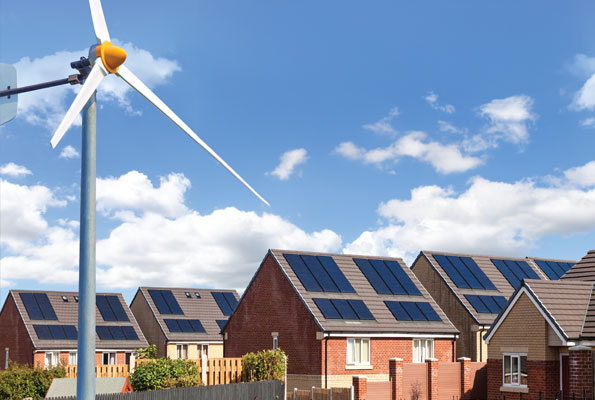
Imagine stepping into a newly built home somewhere in the United Kingdom in 2028. The lights are running on electricity generated from the roof. There is no familiar hum of a gas boiler. Instead, a heat pump quietly does its job in the background. The house feels warm, but not stuffy. Bills are lower than expected. This is the kind of everyday reality the European country is trying to create through its low-carbon housing programme, built around what is known as the “Future Homes Standard.” It is not being pitched as a futuristic concept. Rather, it is being framed as the new normal.
But as with most big policy shifts, the story is not as neat as it sounds. Beneath the surface, there are compromises, industry pressures, and some uncomfortable gaps that could shape how effective the programme really turns out to be.
A change is coming
For years, climate conversations in the United Kingdom tended to focus on energy generation, transport, and heavy industry. Housing was part of the discussion, but not always front and centre. That has changed.
The reason is fairly straightforward. Homes are a major source of emissions. Heating alone accounts for a significant share, and much of that still depends on fossil fuels. In a country with an ageing housing stock and long winters, the scale of the challenge is hard to ignore.
So instead of relying only on retrofitting old homes, which is slow, expensive, and often messy, the government is trying to fix the problem at the construction stage. Build better homes now, and you avoid bigger problems later.
From March 2028, new homes are expected to be far more energy efficient and significantly lower in emissions, around 75% less compared to older standards. Solar panels are expected to become a standard feature on most new homes. Not every single property will have them, but the direction is clear: rooftop solar is moving into the mainstream.
The shift will also change the relationship people have with energy. When a home generates part of its own electricity, even in small amounts, it subtly alters behaviour. People start to think about when they use appliances, how much they consume, and what they can save.
There is also the practical side. Energy bills have been a source of anxiety in recent years. A home that can offset some of its own electricity use offers a kind of built-in resilience. Still, critics have pointed out that the flexibility in the rules, allowing developers to skip solar panels in certain cases, could weaken the impact if not monitored carefully.
Slow goodbye to gas boilers
You might not notice it at first, but the real change is happening inside the home, where gas boilers are quietly being phased out. For decades, gas heating has been the default in British homes. It is familiar, relatively straightforward, and embedded in the country’s infrastructure. Replacing it is not just a technical adjustment, but a cultural one.
The Future Homes Standard essentially ends the installation of gas boilers in new homes. In their place come heat pumps and other low-carbon systems.
Heat pumps are often described in simple terms, but they represent a different way of thinking about heating. Instead of creating heat by burning fuel, they move heat from one place to another. It is more efficient, but also more dependent on how well the home is designed. That is where things can get complicated.
It is easy to focus on solar panels and heat pumps because they are tangible, visible changes, but much of the real progress will come from less noticeable improvements. Better insulation, tighter construction, smarter layouts. These are not the kinds of features that grab headlines, but they matter.
A home that holds heat effectively does not need as much energy in the first place. That reduces emissions, lowers bills, and makes everything else, from heating systems to energy generation, work more efficiently.
This is where it stops being purely about better homes and starts getting a bit political. Behind the scenes, there’s been pushback from developers, and many believe the government under Keir Starmer has had to soften some of its earlier plans.
Builders say stricter rules could make homes more expensive and slow things down, and in the middle of a housing shortage, that’s hard to ignore. Reuters noted that industry voices have influenced timelines and the strictness of the rules.
The wood-burning stove loophole
Wood-burning stoves look cosy and traditional, and they’re often sold as ‘eco-friendly.’ But in reality, they produce a lot of air pollution, sending tiny particles into the air that can be harmful to our health. From a carbon perspective, they still release emissions, even if the fuel is technically renewable.
Allowing them in homes that are otherwise designed to be low-carbon raises obvious questions. Can a home really be considered ‘future-ready’ if it includes a feature that adds to pollution? Critics believe this signals a willingness to compromise, which may undermine the policy’s overall credibility.
Another issue that keeps coming up is timing. The full rollout of the standard has now been delayed until 2028, and that extra time could have bigger consequences than many realise. Homes built before the deadline may not meet the new requirements. And once they are built, they are not easily changed.
Retrofitting is possible, but it is rarely as effective, or as cheap, as getting things right from the start.
The government, for its part, has tried to frame the programme as a realistic step forward rather than an all-or-nothing solution. There is an emphasis on affordability, both for builders and homeowners. There is also a broader package of measures: grants for heat pumps, insulation support, and efforts to expand renewable energy access.
Officials have also pointed to the benefits beyond emissions. Lower energy bills, more stable indoor temperatures, and reduced reliance on imported fuels are all part of the argument. Whether that message resonates fully will depend on how the policy plays out in practice.
The real question is what happens next. Will the loopholes be tightened? Will standards be strengthened over time? Or will the current compromises become permanent? For now, what is clear is that the way homes are built in the United Kingdom is changing. Maybe not as quickly or as cleanly as some would like, but changing nonetheless.
The Future Homes Standard proves that the United Kingdom is making an attempt to build cleaner and better homes. The new houses will consume less energy, won’t use gas boilers, and might even generate their own power. This might save money and help the environment. However, there are still issues such as delays, weaker rules, and pollution-producing features. Builders also have concerns such as cost and speed. Therefore, it might not succeed as intended. In the end, it is a step in the right direction. But the success will depend on how strict the rules become and how well they are followed.