

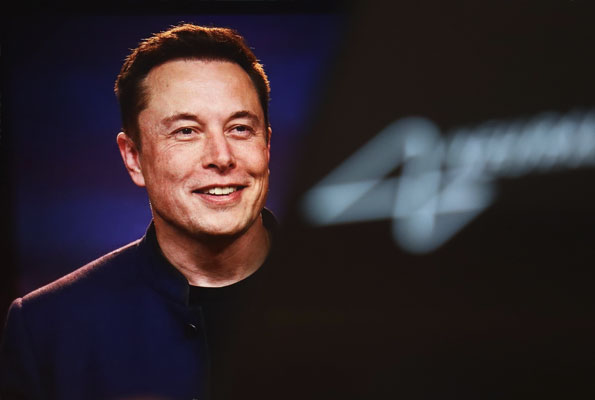
Elon Musk’s SpaceX made history on the Nasdaq on June 12, 2026, raising $75 billion in its initial public offering (IPO) and shattering the previous global record set by Saudi Aramco in 2019. The rocket and satellite company priced shares at $135 each. By the end of the first trading day of day, they had climbed to $160.95, a gain of 19.2%, pushing the company’s total market value past $2.1 trillion.
Goldman Sachs and Morgan Stanley led the deal. In a characteristically Musk touch, investment bankers wore custom green shoes at his request, a nod to the standard ‘greenshoe’ mechanism used in IPOs to manage share supply.
But the headline numbers were not the most consequential part of the SpaceX story. Buried inside the company’s SEC registration document was a disclosure that sent ripples through the cryptocurrency world.
SpaceX holds 18,712 Bitcoins on its corporate balance sheet, purchased at an average price of $35,324 per coin, for a total cost of around $661 million. By the time the filing was made public, those holdings were worth $1.29 billion, representing unrealised gains of roughly $629 million. That single detail turned a landmark technology IPO into a defining moment for digital assets in mainstream corporate finance.
Bigger Than Anyone Knew
Before the IPO, blockchain analytics firm Arkham Intelligence had been tracking SpaceX’s on-chain activity, and estimated the company held around 8,285 Bitcoin. The actual audited figure was 126% higher.
The gap revealed that SpaceX had been quietly accumulating Bitcoin through private, off-exchange transactions that left no visible footprint on public blockchains. This kind of accumulation, done through institutional liquidity desks and untracked custody wallets, is increasingly common among large corporate buyers who want to avoid moving markets as they build positions.
The disclosure placed SpaceX eighth on the global corporate Bitcoin leaderboard, just behind Strive, which holds 19,032 Bitcoins, and ahead of Coinbase Global, which holds 16,492.
When combined with Tesla’s treasury of 11,509 Bitcoins, Elon Musk now oversees more than 30,221 Bitcoins across two publicly listed companies, making him one of the single largest institutional holders of the asset in the world.
A Company Bigger Than Just Rockets
To understand why SpaceX is sitting on a billion-dollar Bitcoin reserve, it helps to understand what the company has become. The S-1 filing presented a consolidated entity that stretches well beyond rocket launches.
In February 2026, SpaceX completed a retroactive merger with xAI, Musk’s artificial intelligence company, at a combined valuation of $1.25 trillion. xAI had already absorbed X Holdings, the parent company of the platform formerly known as Twitter, in March 2025. Because Musk retained controlling stakes in all three companies simultaneously, US accounting rules required them to be presented as a single entity going back to 2023.
Total revenue for 2025 came in at $18.7 billion, up 33% year on year. Starlink, the satellite internet division, contributed $11.4 billion of that figure, and generated earnings margins that most businesses would envy. But the AI division told a different story, producing $3.2 billion in revenue while running an operating loss of $6.4 billion, driven by the enormous cost of building data centres and computing infrastructure.
The consolidated net loss for the year was $4.94 billion. By the Q1 2026, the company had spent $10.1 billion on capital investment, and its cash reserves had fallen from $24.7 billion at the end of 2025 to $15.9 billion.
When a company is burning through cash to build the infrastructure of the future, it needs its reserves to hold their value. Bitcoin, in Musk’s framework, serves as a hedge against the slow erosion of purchasing power that comes with holding large amounts of cash in traditional bank accounts or government bonds.
New Accounting Rules Change the Game
For years, companies that held Bitcoin faced a deeply unfair rule. They were required to write down the value of their holdings whenever prices fell, but they were not allowed to write them back up when prices recovered unless they actually sold the coins. The result was a stream of artificial losses on company income statements that had nothing to do with real cash leaving the business.
In December 2023, the Financial Accounting Standards Board issued a new standard, ASU 2023-08, which took effect for fiscal years beginning after December 15, 2024. Under the new rules, companies must measure their Bitcoin at fair market value each quarter, and record the gains and losses directly in their reported income.
This means SpaceX’s quarterly earnings will now move up and down with the Bitcoin price, adding volatility to its financial results. But it also means the balance sheet reflects reality, and CFOs across the country are now watching how SpaceX navigates this new terrain.
The fact that both Tesla and SpaceX have chosen to hold their Bitcoin through multiple market cycles, including sharp downturns and public earnings pressure, provides a visible case study for other corporate finance teams. It suggests that a multi-trillion-dollar industrial company can treat Bitcoin as a long-term reserve asset rather than a short-term trade.
Index Funds Had No Choice
Major stock indices, which serve as benchmarks for trillions of dollars in passive investment funds, typically require companies to meet strict criteria before they are added, including requirements around how much of the company’s shares are freely tradable by the public.
SpaceX’s free float, the portion of shares available for public trading, was estimated at just 4% to 7%, which would normally disqualify it from index inclusion for months or years.
Index providers moved quickly to avoid the chaos that would follow if a $2 trillion company were kept out of their benchmarks. MSCI approved SpaceX for inclusion in its global indexes effective the day after listing.
FTSE Russell followed five trading days later. The Nasdaq-100 was set to add the stock on July 6. The S&P 500 was the outlier, maintaining its standard requirement of a 12-month waiting period and profitability screens, which SpaceX’s consolidated financials currently fail.
In the weeks before the IPO, institutional investors were selling Bitcoin ETF positions to raise cash for their SpaceX allocations. That selling contributed to a $2.26 billion outflow from Bitcoin ETFs over two weeks, and pushed prices below $60,000. Once the IPO closed and the buying pressure eased, Bitcoin recovered, climbing back above $64,000.
SpaceX Shares, now on the Blockchain
On the same day SpaceX began trading on the Nasdaq, a regulated US brokerage called Backpack Securities partnered with a tokenisation platform called Sunrise to launch a version of SpaceX’s Class A shares on the Solana blockchain.
Each token is backed one-to-one by a real share of SpaceX stock held in regulated custody. Holders can redeem their tokens and transfer the underlying shares to a traditional brokerage account through standard financial clearing systems.
Two other tokenised SpaceX products also launched on Solana, one through a European special purpose vehicle operating under Liechtenstein regulations, and another as a pre-IPO tracking instrument set to expire in March 2027.
Together, the three products generated $37 million in trading volume within the first 24 hours, with Backpack’s offering accounting for $18.2 million of that figure. The demand highlighted an appetite among global investors for around-the-clock access to high-profile technology equities without the constraints of traditional stock exchange hours.
The Mag8
Shortly after the listing, Michael Saylor, the chairman of Strategy and one of Bitcoin’s most vocal corporate advocates, made a pointed observation. The technology world had long spoken of the Magnificent Seven, the seven most dominant American technology companies by market capitalisation.
Saylor argued that SpaceX’s arrival warranted a rename. With SpaceX now public, and holding Bitcoin alongside Tesla, two of the eight largest companies in the world are holding the digital asset on their balance sheets. Saylor called the group the Mag8.
The SpaceX IPO did not just rewrite the record books for the size of a public offering. It drew a line in corporate finance history between a world where Bitcoin was an outlier and one where it is, for some of the most powerful companies on Earth, simply part of how you manage money.