

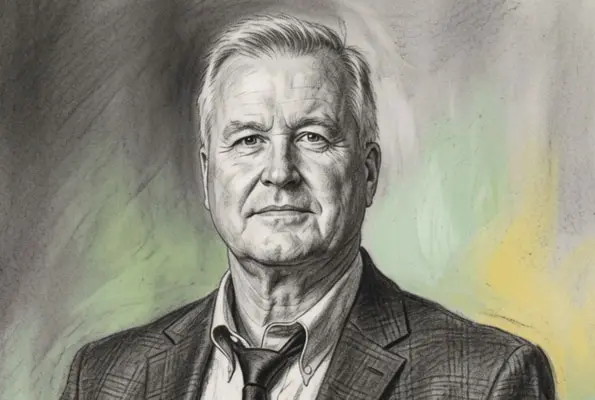
In the last week of May 2026, one of the world’s most famous oil companies fired its own chairman. Not quietly, through a private negotiation, but loudly and immediately, with a terse statement citing “serious concerns” about “important governance standards, oversight and conduct.”
The man in question was Albert Manifold, a celebrated Irish businessman who had barely been in the chair for eight months. His removal sent BP’s shares sliding. It also sent a chill through the financial world. Rich McDonald, a financial markets analyst at the trading platform IG, put the question bluntly, is BP becoming ungovernable?
To understand why that question is even being asked, you need to understand what has been happening inside this company for the past six years.
Revolving door at the top
Most major corporations have one chief executive for years at a time. Strategic decisions take years to play out. Boardrooms are meant to provide stability. BP has had five chief executives since 2020. It has burned through three chairpersons.
Alongside the most recent chair’s removal, a non-executive board member has departed, the head of its customers and products division has resigned, and the chief of its gas and low-carbon business is on his way out.
This is the scale of the problem in plain numbers. Bernard Looney served as chief executive from 2020 until September 2023, when he resigned after a whistleblower raised concerns about personal relationships he had with colleagues and whether he had used his position to promote women he had been involved with.
In December 2023, the board formally dismissed him for “serious misconduct,” ruling that he had knowingly lied to his own directors during an earlier board investigation. As punishment, BP clawed back £32.4 million, roughly $41 million, in bonuses and share awards that Looney would otherwise have received.
His replacement was Murray Auchincloss, who had been BP’s finance chief. Auchincloss spent two years trying to manage a company caught between shareholder demands and a deteriorating share price. The markets never warmed to him. In December 2025, he stepped down with little explanation, replaced almost immediately by Meg O’Neill, the highly regarded chief executive of Australia’s Woodside Energy.
Before Auchincloss departed, the chairman of the board, Helge Lund, had already been driven out. Lund left in April 2025 after more than a quarter of BP’s shareholders voted against re-electing him, a remarkable public rebuke at the company’s annual general meeting.
He was replaced by Albert Manifold, who lasted eight months before being removed by a unanimous board vote that included the new chief executive. Since May 2026, a former construction company boss named Ian Tyler has been serving as interim chairman while the search for a permanent replacement begins.
This kind of leadership churn is not normal. As Lindsey Stewart, director of institutional investor content at Morningstar, put it, “at this point it’s fair to say BP has the most volatile boardroom of the oil supermajors.”
The consequence of this instability is that strategies are drawn up, partially executed, and then abandoned before they have any chance of working. The people running the company are always new, always under fire, and never in place long enough to be held accountable for the decisions they make.
The fall of Albert Manifold
The Manifold story is worth examining closely because it captures the cultural fault lines running through BP’s boardroom.
When Manifold was appointed in October 2025, BP’s senior independent director, Dame Amanda Blanc, praised his “relentless focus on performance.” Manifold had spent a decade transforming CRH, an Irish building materials company, into a global powerhouse through aggressive cost discipline and operational efficiency. He was seen as exactly the kind of hard-driving, no-nonsense leader BP needed.
The problem, according to the people who worked with him, was the way he drove. Inside BP, complaints emerged that Manifold was “bullying” and verbally abusive to colleagues across multiple levels of the organisation. Senior executives reportedly felt “belittled.”
More seriously, he was accused of overstepping the role of chairman entirely, attempting to run the company himself rather than providing oversight, and of mishandling sensitive company information, sharing it with people who had no right to see it while simultaneously withholding key information from his fellow board members.
Manifold rejected all of this as “lies” and retained the elite law firm Mishcon de Reya, signalling his intention to fight. His own account was that he was simply trying to cut costs and reform a slow-moving corporate culture, and that resistance from inside the company was being dressed up as a misconduct complaint. He pointed out that he had refused the traditional perks of the chairman’s role.
No chauffeur, no expensive lunches, a small office. He had spent only 13 days in BP’s London headquarters in 2026, which he argued made the “shadow executive” charge implausible. His reading of events was that “my priorities were not always shared by everyone.”
Three specific clashes defined his brief tenure. He fell out with Ben Mathews, BP’s long-serving company secretary, over costs and governance procedures. He clashed with Simon Henry, a respected former Shell finance chief who sat on BP’s board, during deal negotiations, with each accusing the other of behaving improperly.
And he fought openly with outgoing chief executive Murray Auchincloss, criticising not just Auchincloss’s performance as CEO but his earlier record as finance chief, a remarkable attack from a chairman on the man nominally serving under him.
The board ultimately used a whistleblower complaint about abusive behaviour to remove him. The vote was unanimous.
This has raised a genuinely uncomfortable question among some market observers. The non-executive directors who voted Manifold out are, in several cases, the same people who have presided over six years of strategic drift and value destruction at BP.
Each time a chairman or chief executive is removed, the underlying board escapes scrutiny. By repeatedly sacrificing chairs and chief executives, the underlying board protects itself from shareholder retribution while leaving the company fundamentally directionless.
Activist investors who reshaped BP’s strategy
The boardroom chaos at BP cannot be understood without understanding the investor siege that preceded it.
Beginning in late 2023, two activist hedge funds moved aggressively against the company. The first was Bluebell Capital Partners, a London-based firm led by Giuseppe Bivona and Marco Taricco. In January 2024, Bluebell sent BP’s board a detailed 30-page letter. Their core argument was that BP’s green transition strategy, its plan to invest in renewables and cut oil production, was “ideologically driven and ill-conceived,” and that it was the primary reason BP’s shares traded at a deep discount compared to US oil giants like ExxonMobil.
Bluebell demanded that BP halt investments in solar and offshore wind, increase its oil and gas production target to 2.5 million barrels of oil equivalent per day by 2030, and return an additional $16 billion to shareholders.
The second activist was Elliott Management, a powerful New York-based hedge fund that quietly built a stake of just over 5% in BP, making it one of the company’s largest shareholders. Elliott’s demands were even more aggressive. An additional $5 billion in cost cuts beyond what management had already proposed, a reduction in annual capital spending to around $12 billion, the replacement of BP’s chief strategy officer Giulia Chierchia (who had been a key architect of the green transition), and a full structural reorganisation splitting the company into separate upstream and downstream units.
The board largely capitulated. Helge Lund, who had backed the green agenda, was driven from the chairmanship. Chierchia departed in May 2025, and her entire strategy role was eliminated. BP halted bidding on new offshore wind projects and sold its ten US onshore wind farms.
It set a new production target of 2.3 to 2.5 million barrels of oil equivalent per day by 2030, essentially what Bluebell had demanded. And in April 2026, new chief executive Meg O’Neill announced a full structural reorganisation splitting the company into exactly the two-unit model Elliott had called for.
During Manifold’s tenure, these back-channel investor relationships reportedly became another source of boardroom friction. Internal sources revealed that Manifold held private, unminuted meetings with Elliott Management without informing his fellow directors. While not technically illegal under UK listing rules, this infuriated the board, reinforcing the sense that the chairman was operating as an agent for one particular hedge fund rather than representing all shareholders equally.
The “Great Green Retreat”
In 2020, under Bernard Looney, BP announced the most ambitious climate commitments ever made by a major oil company. It pledged to cut its oil and gas production by 40% compared to 2019 levels by 2030. It was positioning itself as the oil company of the future, not merely an oil company, but an energy company actively transitioning to cleaner sources of power.
The market punished it for this ambition. While BP invested in renewables, its US rivals, ExxonMobil and Chevron, focused entirely on oil and gas, enjoyed record profits as energy prices surged following Russia’s invasion of Ukraine in 2022, and saw their share prices soar. BP’s shares went nowhere.
By 2025, the consequences were stark. BP’s annual earnings fell 16% to $7.49 billion as oil prices softened. More dramatically, net income collapsed by 86%, falling to just $55 million. The company also carried $26.1 billion in net debt, partly due to ongoing liabilities from the 2010 Deepwater Horizon disaster in the Gulf of Mexico.
Faced with these numbers, the green ambition was quietly buried. The company admitted its transition investments were “just not being valued as much” by the market. The renewable energy pivot was abandoned in favour of a full-throated return to fossil fuels.
Meg O’Neill and the new structure
It is into this situation that Meg O’Neill arrived on April 1, 2026, BP’s fifth chief executive since 2020. O’Neill is a chemical engineer by training with 23 years at ExxonMobil and a successful run leading Australia’s Woodside Energy. She was hired specifically to execute the activist-mandated fossil fuel pivot, and she has moved quickly.
On April 14, 2026, she announced the dismantling of BP’s complex three-unit organisational structure, itself only a few years old, in favour of a simple two-division model. Upstream (oil and gas exploration and production) and Downstream (refining, fuel sales, and what remains of the company’s shrinking clean energy activities). Elevated to Deputy Chief Executive to support this restructuring is Carol Howle, BP’s former head of trading and shipping.
This reorganisation has already claimed two significant casualties. William Lin, BP’s gas and low-carbon chief and a 30-year company veteran, found himself without a role as his entire division was carved up and absorbed. He will depart in the third quarter of 2026. Emma Delaney, who had overseen BP’s petrol stations and electric vehicle charging network, left in April 2026 to run Austrian energy group OMV.
O’Neill has one piece of good fortune on her side. She has the current energy market. A series of geopolitical shocks in early 2026, including military conflict involving the United States, Israel, and Iran, disrupted global oil supply by more than 10 million barrels per day in March alone.
This sent refining margins climbing sharply to $16.90 a barrel and created volatile conditions that BP’s large, sophisticated oil trading operation is well-placed to exploit. Analysts upgraded BP’s first-quarter net income projections by 20%, to $2.6 billion, in anticipation of exceptional trading profits.
But windfall profits from a geopolitical crisis are not a governance strategy.
The question of accountability
The immediate governance challenge sits with Dame Amanda Blanc, BP’s senior independent director. Following Manifold’s removal, the board announced that Blanc would again lead the search for a permanent chairman. This decision has provoked anger among institutional shareholders. Blanc led the search that produced Manifold in the first place, a search that, by her own board’s account, failed to identify the behavioural problems that led to his removal just eight months later.
Several major investors have privately called for her to step aside.
“Given that most people were surprised by the appointment of Mr. Manifold and then shocked by the manner of his departure. It would be best if Amanda were not to lead the search,” one investor said.
Blanc’s supporters argue she is being made a scapegoat for a collective failure. Every board member voted to hire Manifold, and every board member voted to fire him. They also point out that as chief executive of insurance giant Aviva, she carries real corporate weight in the City of London, which matters when dealing with an activist-dominated shareholder register.
The stakes in the next chairman search are extremely high. BP needs someone with the industry credibility to command respect at a $75 billion oil supermajor, the political skill to manage a shareholder base filled with aggressive activist funds, and the discipline to let Meg O’Neill run the company rather than attempting to run it themselves.