

The resurgence of American industry was meant to be the talking point of the decade. Cities like Detroit, once the car manufacturing hub of the world, had been abandoned for decades after General Motors (GM), Ford and other American manufacturers moved elsewhere.
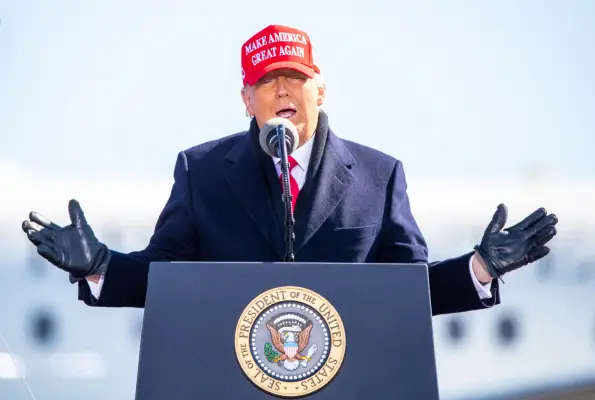
After Donald Trump’s “Make America Great Again” agenda won elections, billions of dollars in private capital began to flow into the industrial heartland, driven by federal policies designed to onshore critical technologies.
However, recent developments might have screwed up this renaissance. The Trump administration’s move to dismantle the Inflation Reduction Act (IRA) and reverse climate policies threatens to undermine the same factories that were making American industry competitive again.
The conflict lies in modern manufacturing. The industrial jobs of the 21st century are inextricably linked to the green transition. Electric vehicles, advanced batteries, and semiconductors are the growth engines of the global economy. By rolling back support for these sectors, the administration is not just attacking “woke” environmentalism.
It is attacking the business models of companies that have already broken ground on massive facilities. This policy uncertainty is kryptonite for investors. Factories take years to build and decades to pay off. If the government changes the rules of the game every four years, capital will simply flee to safer jurisdictions.
You don’t have to look further than Chatham County in North Carolina for an example of what is at risk. Wolfspeed, a leader in silicon carbide technology, committed USD 5 billion to build a semiconductor plant in the area to capitalise on the growing demand for electric vehicles and renewable energy systems, as well as the support provided by the CHIPS Act and the IRA.
These are high-tech manufacturing jobs in a region that desperately needs them. The repeal of federal support pulls the rug out from under these projects and forces companies to reconsider their footprint, leaving local communities with half-finished construction sites and empty, broken promises.
The Cost Of Uncertainty
The economic fallout of a full repeal would be severe. Studies suggest that repealing the clean energy tax credits could put over two million jobs at risk across the wider economy. This figure includes not just the direct manufacturing jobs, but the vast ecosystem of suppliers, logistics providers, and local service businesses that support a major factory.
The “Battery Belt” states, many of which are politically conservative, stand to lose the most. States like Georgia and Tennessee were poised to see manufacturing employment grow significantly under the previous policy regime. Now, they face the prospect of stagnation.
There is also a profound strategic error in ceding the green technology space. China has already established a dominant position in the supply chains for batteries and solar panels. The IRA was the United States’ primary tool to claw back market share and build energy independence.
By abandoning this strategy, the US risks trading dependence on foreign oil for dependence on foreign clean energy technology. If American factories cannot produce competitive electric vehicles or batteries because they lack domestic scale and policy support, the world will simply buy them from China.
The “Strategic National Manufacturing Initiative” proposed by the Donald Trump administration aims to use tariffs to protect industry. However, tariffs are a defensive tool. They tax imports but do not necessarily build domestic capacity.
Without the investment tax credits that make building new factories financially viable, tariffs often just result in higher prices for consumers without the benefit of new jobs. The manufacturing sector needs a carrot, not just a stick. It needs the certainty that the government is a partner in long-term industrial planning.
The early policies of the Trump Administration were resurrecting the long-dead American manufacturing game. But recent policies of politics (as opposed to economic interests) have shattered faith in the revival of the American Dream. For the American worker in both the Rust and Sun belts, the consequences are dire and sudden.
An inability to align industrial standards and strategy with global market trends will leave America in the dirt. To compete in the 21st-century economy and to retain a “manufacturing superpower” status, the old ways will not suffice.