

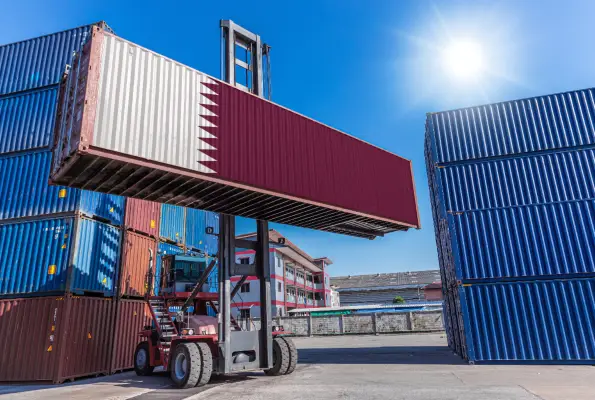
Qatar plans to implement over 188 projects and initiatives as part of its strategy to develop its domestic trade and investment sector between 2024 and 2030. The initiatives, led by the Gulf country’s Ministry of Commerce and Industry, form part of the nation’s broader efforts to make trade a key pillar of the socio-economic transformation agenda titled “Qatar National Vision 2030.”
According to Qatar Television, the plan, announced by the Qatari administration, is based on principles of economic diversification, enhanced competitiveness and greater openness to global markets, aiming to improve overall economic performance and the investment environment. The new strategy also targets sustainable growth in non-oil sectors at an average annual rate of around 3.4% through 2030.
“More than half of the projects fall under entities directly affiliated with the ministry, while the remaining initiatives are distributed across industrial, trade and logistics sectors, reflecting an integrated and coordinated policy approach,” the report stated. It added that the Gulf nation is looking to attract foreign direct investment (FDI) inflows of up to USD 100 billion by 2030 while strengthening domestic investments, which have already exceeded QR326 billion.
The strategy also includes developing free zones and logistics areas spanning approximately 50 square kilometres to enhance trade exchange and leverage Qatar’s strategic geographic location linking major global markets.
“Trade and food security are key pillars of the plan, with efforts focused on securing supply chains and expanding strategic storage capacities to ensure market stability. In this context, the Ministry is working to diversify supply routes and expand trade gateways, including strengthening land transport and regional connectivity to enhance the flexibility of goods movement. These measures have improved supply chain efficiency and enabled Qatar to respond more effectively to both local and global market demands, while reinforcing its position as a regional trade hub,” Qatar Television noted.
In January 2026, Qatar recorded a merchandise trade surplus of approximately QR12.1 billion. To sweeten things further, China became the Gulf country’s top trading partner at QR5.2 billion. However, one worrisome area remains: disruption in the LNG trade arena, with the Iran war damaging the nation’s LNG infrastructure. Iranian missile strikes have severely hammered Qatar’s energy export facilities, disabling two of its 14 LNG trains and a gas-to-liquids (GTL) plant.
Apart from removing approximately 12.8 million tons per year of LNG capacity, these strikes have also resulted in a severe 17% reduction in the Gulf country’s total energy export capability. Repairs, which will likely take a three- to five-year timeline, may end up affecting the supplies of LPG, helium, naphtha, and sulphur across the world.