

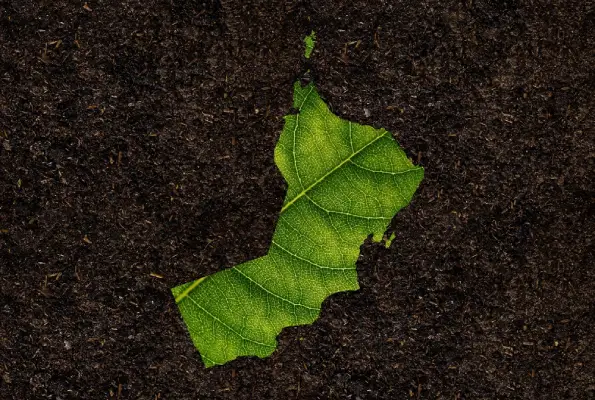
On November 30, 2025, Oman hosted a summit organised as part of the “EU-GCC Cooperation on Green Transition Project.” The event, organised on the sidelines of the 2025 Oman Green Hydrogen Summit (GHSO), brought together policymakers, industry leaders and experts from the Gulf country and the European Union (EU).
While delivering his keynote address, Christophe Farnaud, Ambassador of the European Union Delegation to the Kingdom of Saudi Arabia, the Kingdom of Bahrain and the Sultanate of Oman, highlighted the significance of the event.
“This summit comes at a pivotal moment. Despite some headwinds, the global energy transition continues at a great pace, with hydrogen as an essential element connecting renewable energy generation, industrial innovation, climate ambition and new growth opportunities,” he commented.
While taking note of Oman’s commitment to green hydrogen, Farnaud continued, “Oman has positioned itself as one of the most committed and forward-looking actors in this field. Through its National Hydrogen Strategy, the establishment of Hydrom and its ambition to produce over 1 million tonnes of green hydrogen annually by 2030, backed by tens of billions of dollars of planned investment, Oman is sending a clear message to the world: it is ready to lead.”
The Ambassador added, “Combining Oman’s vast renewable potential with Europe’s technological expertise and growing demand for clean molecules opens the window for a real partnership, one that can connect our strengths, build long-term resilience and shape the emerging global hydrogen economy together. But beyond technology, our cooperation is also about building ecosystems: connecting research, policy, skills and industry in ways that drive sustainable growth. That is precisely the purpose of today’s forum, to explore the full hydrogen value chain, from production and transport to end-use in sectors such as shipping, heavy industry and power generation.”
“As we look ahead, the EU sees Oman not only as a key partner in the energy transition, but also as a strategic bridge between regions, linking Europe, the Gulf and Asia in the future global energy landscape,” Farnaud noted.
The event also included a fireside chat focused on hydrogen market frameworks, as well as discussions on scaling and investment.
Additionally, there were two panel discussions: the first addressed the partnership between Oman and the EU, exploring opportunities for investment and the scaling up of green hydrogen. The second panel brainstormed ideas for developing hydrogen ecosystems.
Meanwhile, Oman is surging ahead with seven projects that aim to produce one million tonnes of hydrogen annually by 2030, marking a major shift from planning to full-scale execution.
Breaking the news at GHSO, Abdulaziz al Shidhani, Managing Director of Hydrom (the entity leading the Sultanate’s green hydrogen efforts), said the projects are “progressing according to plan,” highlighting the Gulf nation’s rising momentum in the global clean-energy race.
H E Eng Salim bin Nasser al Aufi, Minister of Energy and Minerals, said the event reflected Oman’s “ongoing efforts to strengthen energy security at home and abroad, and to position Oman as a central hub for low-carbon hydrogen industries.”
He further noted that the government has spent recent years building “clear policies and strong regulatory foundations” to support a sector poised for rapid growth.
“Oman’s progress in energy has always been about turning challenges into opportunities. What began decades ago with the use of associated gas became a cornerstone of the global energy system. Today, we are seeing a similar evolution in solar, wind and hydrogen,” the minister said.
As per Shidhani, Oman’s national hydrogen framework, built around elements like defined land allocation, policy clarity and structured investment channels, has now matured into an integrated programme linking infrastructure, regulation and development pipelines together, ensuring coordinated execution from the government level.
“Seven projects, with a combined targeted output of one million tonnes of green hydrogen annually, are progressing through milestones. Two other schemes were concluded by mutual agreement after developers reassessed market conditions,” the official noted.