

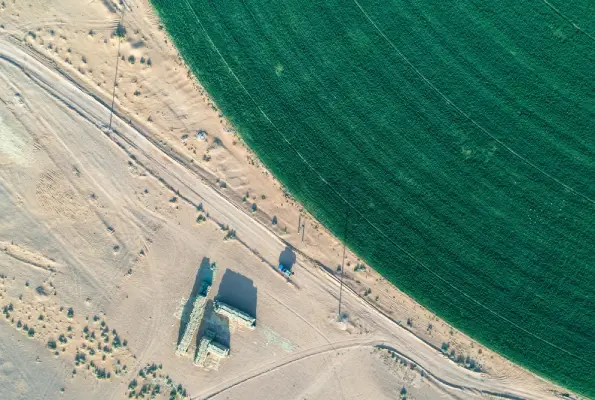
Morocco is currently facing a climate reality that the rest of the world fears. A structural water crisis that threatens its social and economic fabric. With agriculture employing nearly 40% of its workforce, the Kingdom cannot afford for the taps to run dry.
In response, Morocco has launched the “Green Generation 2020-2030” strategy, a policy framework that acknowledges traditional farming is no longer viable. The strategy is pivoting the entire sector toward “Agritech” (the digitisation of agriculture), aiming to double water efficiency by 2030 and create a new class of tech-savvy “agri-preneurs” capable of cultivating profit from an increasingly arid landscape.
The Rise Of ‘Digital Farmer’
To bridge the gap between government policy and the dusty reality of the farm, Morocco created the Digital Agriculture Pole (PAD). This is the country’s first “Agriculture 4.0” R&D centre, designed to act as a translator between high-level science and smallholder farmers.
The PAD brings together public and private stakeholders to deploy precision agriculture tools that were previously accessible only to industrial giants. The goal is to connect two million farmers to e-services that provide real-time data on weather patterns, soil moisture, and market prices.
By using IoT (Internet of Things) sensors to monitor crop stress, farmers can switch to “fertigation” (precise application of water and fertiliser), ensuring that not a single drop of water is wasted. A core tenet of the strategy is human capital. The government recognises that an ageing farming population cannot drive technological adoption.
Therefore, the strategy explicitly targets the youth, aiming to introduce 180,000 young farmers to the sector and create 350,000 new jobs. These are not traditional labour roles as they are technical positions requiring skills in data management, drone operation, and business logic, effectively gentrifying the agricultural workforce to ensure long-term resilience.
Startups Turning Sand Into ‘Green Gold’
The most tangible evidence of this shift is the explosion of Morocco’s agritech startup ecosystem, which is attracting significant international capital to solve local problems. Leading this charge is Sand to Green (a startup representing the cutting edge of desert agriculture), which utilises a model combining solar-powered desalination with regenerative agroforestry to turn barren sand into arable land.
By treating brackish groundwater with solar energy, they unlock new water sources without the carbon footprint of fossil fuels. In May 2025, “Sand to Green” secured a USD 50,000 grant at the “DeepTech Summit” to expand its operations, validating a business model that sells not just produce, but also carbon credits generated by turning desert sand into carbon sinks.
Meanwhile, addressing the information gap is SOWIT (which provides “Agronomy as a Service” using satellite imagery and AI). Their platform analyses crop health from space, telling farmers exactly when to irrigate or harvest.
This data-driven approach maximises yields while minimising input costs. The company’s success (underscored by a USD 2.12 million investment from the International Finance Corporation (IFC) in November 2024) demonstrates that global investors see African agritech not as a charity case, but as a high-growth asset class essential for future food security.
Cultivating Resilience
Morocco’s “Green Generation” strategy represents far more than just a policy adjustment; it is an existential pivot toward a resilient future. By blending high-level strategy with tangible Agritech innovation, the Kingdom is transforming its deep-seated water crisis into a competitive advantage.
The rise of the digital agri-preneur and the success of startups like “Sand to Green” and “SOWIT” validate a model where technology is the ultimate tool for climate adaptation. Morocco is not merely managing scarcity. It is cultivating a new economic reality.
The ability to grow food efficiently in the desert, backed by global capital and data-driven insights, ensures its domestic food security and solidifies its role as a vital, stable supplier to the global market. Morocco is proving that in the face of the climate reality, adaptation is the most profitable form of revolution.