

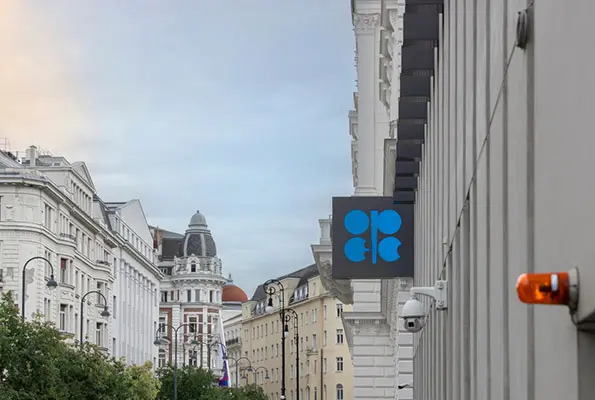
At a meeting on Sunday (September 6), OPEC+ kept its oil output policy unchanged for October, as the producer group takes more time to agree new quotas before deciding its next output steps.
The meeting of seven core OPEC+ members, Saudi Arabia, Russia, Iraq, Kuwait, Algeria, Kazakhstan and Oman, comes as the Iran war continues to disrupt energy exports through the Strait of Hormuz, limiting the producer group’s influence over global prices and market share.
In August 2026, OPEC+ agreed to boost its production activities for September, a decision that completed the energy cartel’s phased rollback of a 1.65 million-barrel-per-day supply cut first agreed in 2023.
Despite the agreed production increases, the group made up of the Organisation of the Petroleum Exporting Countries (OPEC) nations and their allies, including Russia, is producing far below its targets due to volatile geopolitics in the Middle East.
“OPEC+ currently has very limited power over the physical oil market. The group can change production targets on paper, but it cannot guarantee that those barrels will be produced or actually reach the market,” said Jorge Leon of Rystad Energy, while interacting with Reuters.
“The focus now shifts away from monthly production adjustments and towards the much more consequential debate over 2027,” he added further.
OPEC+ still has another layer of production cuts in place that will cover most members of the 21-country group until the 2026 end.
Before it decides how to unwind the cuts and return production to the market, OPEC+ needs to review members’ oil production capacity to set 2027 output baselines, which, as per the reports, will form the basis for quotas.
As per the sources, this debate will likely happen later in 2026, and hence OPEC+ is likely to pause its output increases for Q4. The Sunday statement also made no mention of policy direction beyond October.
In May this year, both OPEC and OPEC+ received a massive jolt, as the United Arab Emirates (UAE) left the groups.