

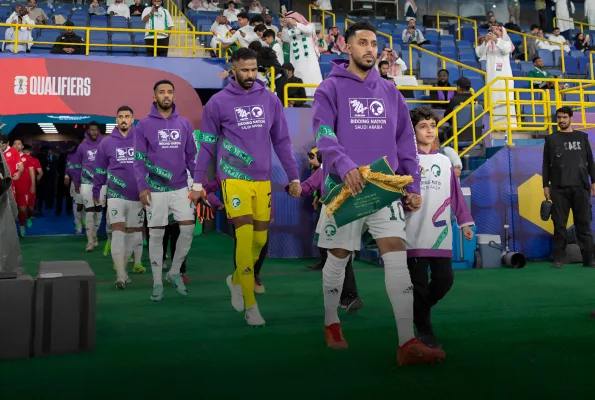
Saudi Arabia aims to become a diversified, all-round economy within the next five to six years, as outlined in its ambitious “Vision 2030” agenda. According to analysts, the Kingdom’s successful bid to host the FIFA World Cup in 2034 will add a major feather.
Over the past few years, Saudi Arabia has rapidly established itself as one of the world’s premier venues for major sporting events, using these to elevate its geopolitical and economic statuses not only in the Gulf, but around the world.
The FIFA World Cup is set to be the largest and most symbolic event in this transformation, offering the Kingdom a platform to showcase its cultural depth, administrative capabilities, attractive tax regime, and growing foreign direct investment (FDI) opportunities.
In fact, as per the Assistant Minister of Investment, Ibrahim Al-Mubarak, the market value of the Saudi sports sector has reached SR32 billion, compared to less than SR5 billion at the time of the launch of “Vision 2030” in 2016.
The next sporting powerhouse
In April 2025, Saudi Minister of Investment Khalid Al-Falih, at the first Sports Investment Forum in Riyadh, stated that the target for the sector is to reach more than SR80 billion by 2030, while crediting factors like legislative structure, financial governance, and investment areas and models, that is not only turning sports into an integrated economic sector but also opening promising horizons for businesses.
Al-Mubarak said that the rate of sports practised in the Kingdom has increased from 13% to 48% currently since the launch of Vision 2030. Since 2016, more than 70 new sports federations have been established, overseeing activities covering various Olympic and non-Olympic sports, reflecting the diversity of the Saudi sports sector. Saudi Arabia has hosted more than 100 international championships, events, and activities.
The Ministry of Investment considers sports in the Kingdom to be an essential element in building a modern economy, shaping human capital, and building national identity. Sports is no longer a complementary sector, as it has become an avenue for reshaping the national economy, attracting investment, and building new value chains.
“The Ministry of Investment is working in an integrated partnership with the Ministry of Sports, the Public Investment Fund, sports federations, and all relevant entities to enable investors to enter the sports market with ease and transparency, based on modern legislation. This is achieved through initiatives, most notably developing a map of investment opportunities in the sports sector. This includes infrastructure such as the construction of stadiums, training complexes, private clubs, and smart sports facilities; sports services such as marketing, media, sponsorship, and consulting services; and sports technologies like AI in sports performance, rehabilitation technologies, and interactive digital platforms. It also has sports tourism, specialising in the development of tourism programmes and packages that attract visitors to attend tournaments or practice sports in the Kingdom.” Al-Falih said.
Various incentives are being offered to investors, such as exemptions, logistical support, financing facilities, and partnerships with government agencies and programmes. The establishment of specialised business centres within and outside the ministry supports investors in the sports and other sectors, from the initial stage to operation and expansion, while providing information and studies.
Al-Falih also pointed out that a sector-specific investment plan for sports was developed in 2021, including a comprehensive study of 88 investment opportunities and a complete map of value-added chains in the sports sector. Twenty of these priority opportunities were identified, including sports clubs, academies, apparel, sports equipment, and sports facilities, with a total value of up to SR20 billion.
Within this framework, the Kingdom will host the AFC Asian Cup 2027 and the 2034 World Cup. The Gulf nation is certainly betting big on these two events to become a global hub through sustainable investments, world-class infrastructure, and an integrated and supportive legislative system.
While these two events will come with massive costs and benefits, the potential economic and social benefits could outweigh the investment if managed strategically. Let’s see what happened with Qatar and its tryst with the 2022 World Cup. The Gulf nation reportedly spent between $200 to $300 billion on infrastructure projects over a decade, while the short-term benefits (primarily visitor spending and broadcasting rights) contributed approximately 1% of its GDP. In pure tourism revenue, Qatar gained between $2.3 billion and $4.1 billion, representing 0.7% to 1.0% of GDP in 2022 alone.
Saudi Arabia, with its larger economy and broader “Vision 2030” initiatives already underway, could expect even higher absolute figures. The indirect benefits, such as increased foreign direct investment, higher tourism inflows, and stronger non-oil sector growth, could have a much more profound effect.
Qatar’s experience shows that targeted infrastructure investments, beyond the immediate needs of the World Cup, can boost non-hydrocarbon income by as much as 40% over a decade. Saudi Arabia, with its ambitious reform programmes, may see even greater multipliers.
Moreover, hosting the tournament will solidify the Kingdom’s growing global influence, demonstrating its capabilities in project management, governance, and large-scale event hosting. On the infrastructure front, Saudi Arabia plans to build 15 new stadiums or refurbish existing ones across key cities such as Riyadh, Jeddah, Alkhobar, Abha, and NEOM. In Riyadh alone, six of the eight proposed stadiums will be entirely new, something which will put the city in direct competition with London, which boasts 22 stadiums across its entire urban area.
The new NEOM Stadium, situated 350 metres above the ground, promises a futuristic experience, reinforcing the Kingdom’s commitment to innovation and modernity. Meanwhile, Jeddah will see the construction of three new stadiums and the refurbishment of an existing one. This scale of development is expected to contribute not just to World Cup success but to Saudi Arabia’s long-term strategy of boosting the non-hydrocarbon share of its GDP.
In hospitality, several new hotels will be constructed, including FIFA headquarters hotels in Riyadh’s New Murabba district, luxury accommodations for VIPs in Khobar’s Al-Olaya district, and exclusive venues near Abha. King Salman International Airport in Riyadh will also expand, thereby aiming to accommodate up to 100 million passengers per year, representing a 170% increase compared to 2023 capacity.
Benefits galore
Apart from sports and hospitality, another sector which will directly benefit from the 2034 World Cup bid is tourism, which is already experiencing impressive growth. In 2023, the Kingdom ranked among the fastest-growing countries for international tourist arrivals, according to the United Nations.
Hosting the event will further boost the Gulf major’s image as a desirable travel destination and cultural hub, thereby increasing the nation’s global visibility, encouraging cross-cultural interaction, and, most importantly, driving consumer spending. South Korea’s World Cup in 2002 brought in more than 2 million additional foreign visitors, while Russia in 2018 welcomed 570,000 tourists during the event alone. Qatar also saw a remarkable post-tournament boom in tourism.
What Saudi Arabia needs here is targeted marketing strategies to promote post-World Cup tourism, which will ensure cultural, religious, and adventure tourism sectors continue to flourish, as major sporting events like the World Cup may end up temporarily diverting tourists from traditional hotspots, leading to short-term disruptions.
Job creation is another area that will reap the benefits from the excitement around the World Cup. Estimates suggest that World Cup preparations and the tournament itself could create more than 1.5 million new jobs in the Kingdom, representing nearly 10% of the current workforce. Again, going back to history, Russia anticipated around 220,000 jobs from the 2018 World Cup. Qatar claimed that 1.5 million new jobs were created in construction, real estate, and hospitality sectors during its preparation phase, with 850,000 additional residential sector jobs added between 2010 and 2022.
A successful World Cup will underline Saudi Arabia’s commitment to reform, providing confidence to potential investors across sectors like finance, manufacturing, IT, and tourism. The requirement to follow FIFA’s infrastructure guidelines will boost standards across transport, hospitality, and urban planning—benefiting the economy long after the tournament’s conclusion. However, one immediate challenge here will be upkeeping and using the stadiums for long-term gains, as maintenance costs could be substantial.
Talking about the Kingdom’s tryst with major sporting events, 2024 marked a pivotal year for the Gulf nation as it hosted many internationally recognised sporting events such as the Dakar Rally, the Formula 1 Saudi Arabian Grand Prix, the World Table Tennis Grand Smash, the Women’s Tennis Association Finals, and the Esports World Cup, in addition to growing the Saudi Pro League for professional football (soccer), thereby proving its organisational ability to showcase such showpiece tournaments, something which will keep the administration confident ahead of the World Cup 2034.
According to SURJ Sports Investments (Saudi Arabia’s leading sports investor), the Saudi sports industry, currently valued at roughly $8 billion, will reach $22.4 billion in 2030. The Kingdom has initiated key developments, such as King Salman’s $23 billion project to build “The Global Sports Tower,” a state-of-the-art sports facility set to become the largest sports tower in the world.
Additionally, the Kingdom has started internal developments, like enhancing its transportation system, to accommodate the large influx of fans and tourists that will come with hosting the FIFA World Cup.
The Saudi Pro League has garnered significant global attention due to its high-profile signings of players from top football leagues, including LaLiga, the Premier League, Ligue 1, and the Bundesliga. In 2024, the clubs spent roughly $1 billion to secure international talent, including Neymar, who joined Al-Hilal from Paris Saint-Germain for roughly $98 million. The turning point for the league was the time when Al-Nassr signed football legend Cristiano Ronaldo to a two-year contract worth $200 million. Now the league boasts players like Karim Benzema, N’Golo Kante, Roberto Firmino, Sergej Milinkovic-Savic, Sadio Mane, Riyad Mahrez, and Jordan Henderson, which has elevated the league’s presence internationally.
Good days ahead
Dr. Yaseen Ghulam, associate professor of economics and director of research at Riyadh’s Al-Yamamah University, told Arab News that the last World Cup in Qatar was a significant investment, with the Gulf country spending $200-300 billion on infrastructure over a decade.
While the short-term benefits from visitors’ spending and broadcasting rights were estimated to be about 1% of the country’s GDP, visitor expenditure on tourism and other revenue from tournament-related programming were projected to be between $2.3 billion and $4.1 billion, representing 0.7%-1.0% of GDP in 2022.
Indirect benefits included higher FDI and increased tourism, while the Gulf nation managed to increase non-hydrocarbon income by 40% during the decade of preparation for the World Cup by investing in infrastructure and diversifying the economy.
For Dr. Ghulam, Saudi Arabia experienced significant growth in foreign tourism in 2023, as per the UN’s list of countries with the highest growth rate. Large sporting events can enhance a host nation’s global reputation by promoting tourism and cross-cultural interactions, while also enabling the country’s self-awareness, motivation, and economic development.
He also sees the Kingdom’s economy witnessing short-term gains like increased consumer spending and job creation.
“Job creation is uncertain, but some figures suggest a 5 million increase. Previous World Cups have predicted 50-60,000 more jobs, with Russia estimating 220,000. Qatar’s authorities predicted 1.5 million new jobs in the construction, real estate, and hospitality sectors. The event in Qatar contributed to 850,000 additional jobs in the residential sector between 2010 and 2022. Saudi Arabia’s event could result in more than 1.5 million new jobs, accounting for 10% of the current workforce. The NLO estimates a 21,000/year job deficit, and Saudi universities produce 200,000 graduates annually. A significant portion of this workforce could be employed in World Cup 2034-related projects, with female workers best suited for the administration and hospitality sector,” he added.
Hosting a mega sporting event like the FIFA World Cup will definitely lead to increased GDP, jobs, tourism, and a stronger national brand image for the Kingdom. By showcasing administrative skills and offering incentives, the Gulf country can significantly increase FDI in the financial, manufacturing, IT, and tourism sectors. To achieve that, the Kingdom must follow FIFA guidelines for infrastructure construction that, apart from boosting income from the hospitality and tourism sectors, will increase the Gulf nation’s importance in the global scenario.
“Although the upkeep of new infrastructure may be costly, the incremental cost is not too much, as the Kingdom is working on Vision 2030, and FIFA World Cup preparations are considered a positive externality of its vision,” Dr. Ghulam concluded.