

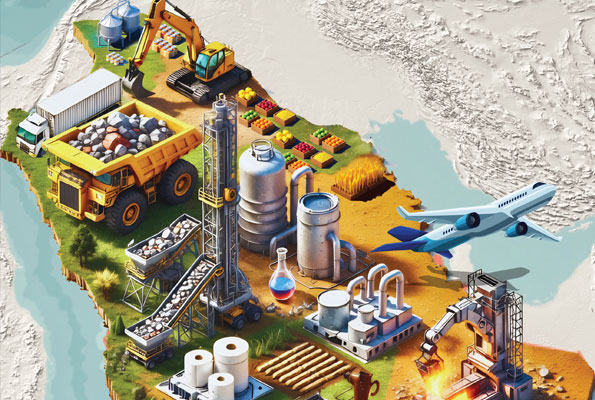
The Kingdom of Saudi Arabia is entering a new phase in its industrial journey, one defined by efficiency, sustainability, and innovation. Spearheaded by the Industrial Competitiveness Programme (ICP), this transformation is reinforcing the strength of Saudi industries while supporting their transition to clean, efficient energy sources.
Launched in January 2024 by the Ministry of Industry and Mineral Resources, the ICP was designed to help industrial facilities enhance operational efficiency, reduce costs, and sustain competitiveness in a changing global market.
The programme represents a unified national effort, developed with over seven government partners and private-sector experts, to drive the Kingdom’s industrial growth in line with socio-economic diversification and climate goals like “Vision 2030” and “Net-Zero 2060.”
Over the past five decades, Saudi Arabia’s industrial sector has expanded steadily, supported by strong government backing and a focus on high-potential industries including chemicals, food processing, and advanced manufacturing. These efforts form part of a wider strategy to diversify the economy and stimulate investment in non-oil sectors.
The National Industrial Strategy plays a central role in this transformation by creating new investment opportunities, strengthening value chains, and encouraging innovation across multiple industries.
In supporting the goals of Vision 2030 and Net-Zero 2060, the Ministry of Industry and Mineral Resources is focused on strengthening the industrial and mining sectors as key engines of non-oil economic growth.
“It (the Gulf nation) strategically chose these two sectors to diversify the national economy and increase its overall national contributions through a national industrial programme and logistics services to establish the Kingdom as a leading industrial and mining powerhouse, as well as a global platform for logistics services,” the authority told the Global Business Outlook.
As of 2026, the ministry is offering resources and benefits to industry stakeholders to create an appealing environment for investments. Most importantly, it aims to establish an effective governance framework that enhances the competitive capabilities of its partners and improves the efficiency of utilising the industry leadership’s assets.
Its strategy is based on these pillars, including organisational structure and capacity development, regular and effective interactions with industrial and mining sector players, centralisation of the investor, the establishment of a professional and change-oriented work culture in both industries, and, most importantly, accelerated digital transformation.
Achievements that reshape industry
Since its launch, the ICP has begun delivering tangible results across the industrial sector. Hundreds of industrial establishments have engaged with the programme, with a significant number already benefiting from financial, technical, and operational support.
These efforts have helped both large manufacturers and small and medium-sized enterprises improve operational efficiency, optimise energy consumption, and strengthen their long-term competitiveness.
At the national level, the programme contributes to safeguarding the industrial sector’s economic value while supporting the Kingdom’s broader environmental ambitions through improved energy efficiency and emissions reduction.
Within the private sector, the initiative has also supported workforce development by providing specialised training programmes focused on energy management and industrial efficiency. Thousands of professionals have already participated in these initiatives, strengthening technical capabilities within the sector.
The programme’s reach now extends beyond large corporations. By expanding eligibility criteria, the ICP has opened opportunities for SMEs operating in sectors such as food production, leather, paper, and metal industries. This expansion enables smaller companies to modernise their operations and remain competitive as energy markets evolve.
Through partnerships with national institutions such as the Saudi Energy Efficiency Centre and the National Academy for Industry, the programme has also introduced professional certification and capacity-building initiatives aimed at developing a skilled industrial workforce.
Beyond training, the programme addresses operational challenges faced by smaller enterprises by analysing energy consumption patterns and recommending solutions such as upgrading inefficient equipment and adopting modern technologies. This targeted approach ensures that efficiency gains and cost savings extend across the broader industrial ecosystem.
Collaboration, capability, and confidence
Collaboration has been a key factor behind the programme’s progress. Partnerships with organisations such as MODON have enabled factories in industrial cities to access energy audits, consulting services, and efficiency improvement programmes.
Through these initiatives, many factories have assessed their energy performance and implemented practical measures to improve operational efficiency and reduce production costs.
The programme has also encouraged participating companies to adopt structured energy management systems and integrate efficiency practices into their daily operations. These improvements not only enhance operational performance but also strengthen financial resilience and long-term sustainability.
Additionally, the initiative has helped foster a growing ecosystem of collaboration among government entities, industrial operators, and specialised service providers, creating a supportive environment for continuous improvement across the sector.
2026 and beyond: Expanding the competitive edge
Not resting upon the laurels earned so far, ICP is now preparing to enter a new stage of development. The second phase of the programme will expand its scope beyond energy efficiency to encompass a comprehensive cost competitiveness framework, focusing on evaluating labour, material, and logistics costs, apart from identifying key challenges and opportunities to improve overall industrial cost structures.
The findings from this phase will form the foundation for “Phase Three,” which will deliver holistic solutions to optimise working capital, production utilisation, and value chain integration across the sector. These forward-looking efforts will ensure that Saudi Arabia’s industrial sector not only sustains its current momentum but continues to evolve as a regional and global benchmark in efficiency, sustainability, and competitiveness.
As Saudi Arabia advances toward a diversified and knowledge-based economy, the ICP will continue to be a key enabler of sustainable industrial growth, reinforcing the Kingdom’s global reputation as a competitive, efficient, and forward-looking industrial powerhouse.