

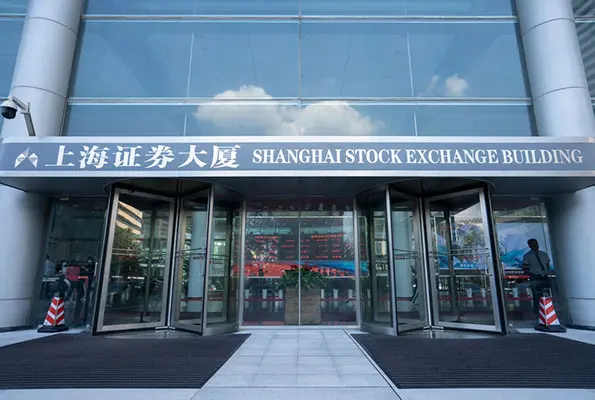
Shares of CXMT Corp (ChangXin Memory Technologies), China’s largest dynamic random-access memory (DRAM) manufacturer, soared 466% on their Shanghai trading debut on Monday (July 27). With this, CXMT Corp became Asia’s biggest IPO debut of 2026, catapulting the chipmaker to the top of China’s stock market by valuation despite a recent selloff in global tech stocks.
As per Dealogic’s data, CXMT Corp’s debut surge was the largest among the world’s 10 biggest IPOs this year by deal value. The jump was also the largest recorded among the Chinese new listings valued at USD 5 billion or more in Dealogic data going back to 2006.
The stock closed at 49 yuan, compared to its sale price of 8.66 yuan per share, after reaching an intraday high of 55.03 yuan. The rally lifted CXMT’s market capitalization to 3.3 trillion yuan (USD 487.73 billion), sharply up from USD 85.5 billion during the chipmaker’s IPO process.
CXMT, formerly ChangXin Memory Technologies, has so far raised 57.92 billion yuan (USD 8.6 billion) in the IPO, the biggest mainland Chinese semiconductor offering on record. The tally surpassed SMIC’s USD 7.5 billion Shanghai share sale in 2020. The IPO proceeds could rise to 66.61 billion yuan if an over-allotment option is fully used.
As the tech curbs imposed by the United States intensify the global semiconductor race, CXMT has emerged as a key pillar of Beijing’s drive to build a self-sufficient chip industry and close the gap in strategic technologies such as artificial intelligence (AI).
The explosive market debut also crowned CXMT as China’s most valuable listed company, overtaking banking giant Industrial and Commercial Bank of China. The chipmaker’s first-day gain created another record by surpassing the debut performance of China Resources New Energy, whose shares more than doubled after a USD 3.6 billion IPO earlier in July. However, despite breaking numerous records, CXMT’s stock value still trails overseas rivals in market terms.
Nonetheless, the strong debut also indicates the extent to which investors are willing to pay for a marquee Chinese chip firm, despite the ongoing volatilities following an AI-led selloff.
Around 141.1 billion yuan’s worth of CXMT shares were traded in Shanghai on Monday, making the company the first A-share stock to exceed 100 billion yuan in turnover in a day, as per the local media reports.
The blockbuster phenomenon also resulted in the Chinese semiconductor shares dropping 0.4%, as fund managers repositioned their bets for CXMT shares.
“Investor appetite is largely being driven by providing Chinese investors a way to meaningfully get exposure to the current memory supercycle,” said Jing Jie Yu, an equity analyst at Morningstar, while interacting with Reuters.
“The deal was priced at a steep discount, at roughly one time Morningstar’s estimated 2027 price-to-book value versus 2.1 to 2.3 times for global peers,” he remarked, while terming the stock’s first-day surge as “excessive.” To justify his stance, he cited the memory sector’s cyclical nature and the longer-term drag from American export controls that restrict access to advanced chipmaking technology.
CXMT’s astronomical rally, however, valued it at nearly half of US rival Micron, sparking AI-bubble-related concerns due to the fact that CXMT’s expanding dominance in the Chinese semiconductor ecosystem has enabled it to raise prices for domestic tech customers like Huawei.
“The (CXMT) stock is too expensive and smells of speculation. It’s hard to say the optimism is sustainable,” said Yuan Yuwei, hedge fund manager at Trinity Synergy Investments.
Only 6.73% of CXMT’s enlarged share capital has been made available for trading, which, as per the analysts, may end up creating price swings and attracting strong turnover.
“The memory market remains tight, with price increases expected to continue through the end of 2027. Amid persistent supply shortages, many customers are seeking to diversify their memory supplier base, which should significantly benefit CXMT and create more business opportunities,” said Ellie Wang, an analyst at technology research firm TrendForce.