

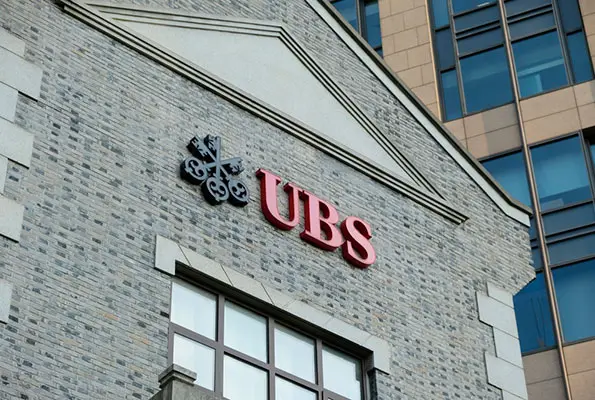
Several major foreign banks have reportedly expressed their interest in a possible merger or combination with Swiss financial biggie UBS, reported Blink.
As per the Swiss newspaper, at least eight banks have signalled interest to UBS, citing inputs from an insider.
The report emerges against the backdrop of UBS receiving a blow from Switzerland’s upper house, which has voted in favour of tougher capital rules, under which the bank will be required to hold about USD 18 billion in additional capital.
Ahead of the vote, chairman Colm Kelleher warned that UBS could rethink its Swiss base if capital rules were too harsh.
The American news website Semafor reported about UBS management reviving discussions on ways to reduce its exposure to Swiss regulation, including through a possible combination with a foreign bank.
Reacting to the news, Switzerland’s Finance Minister, Karin Keller-Sutter, said that it was unlikely that UBS would leave its Swiss base, as it would be pricier than the new capital rules and legally complicated.
As per the proposals passed in the parliament’s upper house, UBS would be required to back its foreign units with 90% Common Equity Tier 1 capital, rejecting a proposal favoured by the financial giant for 50% CET1 capital and 50% Additional Tier 1 (AT1) capital, which is cheaper to hold.
Keller-Sutter said UBS “went all out”, probably having assumed it would get its way in Parliament.
The Swiss Finance Minister, a vocal supporter of the capital rules, said the Guy Parmelin government had already made some compromises with the bank, a notion UBS rejected in comments last week.
The capital rules bill will now move to Switzerland’s lower house, with a final decision expected at the end of 2026 at the earliest or, more likely, in 2027.
Speaking on the 90% CET1 rule, UBS CEO Sergio Ermotti said last Tuesday that the mandate would lower UBS’s additional capital bill by USD 4 billion compared to the government’s 100% proposal.
“This would result in around USD 18 billion of required extra CET1 capital under the entire regulatory overhaul, based on the bank’s calculations,” he stated further.
The Parmelin government had originally proposed making UBS back its foreign units with 100% CET1 capital, a demand that UBS said was excessive and likely to make it less competitive.
The upper house narrowly rejected the plan before backing the 90% CET1 capital option.
There was another moderate proposal that was agreed in August by an upper house committee to allow UBS to back foreign units with 50% CET1 capital and 50% Additional Tier 1 (AT1) capital, which is cheaper to hold.
The 90% CET1 proposal secured 29 votes, whereas the 50% AT1 option, preferred by UBS and Ermotti, got 16.