

British Airways owner IAG has trimmed its 2026 capacity outlook to flat on Friday (July 31), after reporting a 16% drop in Q2 profit hit by soaring fuel costs and weaker travel demand linked to the ongoing Iran war.
The capacity downgrade was, however, offset by quarterly profit that beat the analyst expectations, along with a slightly lower fuel bill forecast.
IAG is not alone in seeing Iran’s war’s impact hurting its prospects, as the European aviation sector has overall struggled with spiralling fuel costs since the conflict began at the end of February 2026. Ryanair and easyJet too have seen an uptick in their operational costs (including jet fuel), with a dampened travel demand complicating things further.
With little sign of an end to the war, many airlines are reportedly re-evaluating their hedging strategies and tightening cost controls, with many cutting capacity.
IAG, however, sought to project stability. Analysts and investors too appeared unfazed by the aviation major’s latest results, with few adjusting their financial forecasts.
“Our strategy is working. Our exposure to different markets and our diverse brands and customer propositions are providing resilience,” Chief Executive Luis Gallego said on a media call.
IAG, which also owns Iberia and Aer Lingus, said its fuel costs for the year would be between 8.3 billion euro and 8.6 billion euro (USD 9.6-USD 9.9 billion), slightly lower than the roughly 9 billion euro forecast in May.
“All of IAG’s airlines were hit by higher fuel prices from March onwards, as fuel costs and emissions charges climbed nearly 23% in the second quarter to 2.22 billion euro,” the company said.
“IAG has long relied on demand on its core transatlantic routes, which remain strong with growing capacity and strong bookings in premium for British Airways. Still, the conflict in the Middle East has bogged down results,” it added further, while issuing warnings on profit and capacity outlooks.
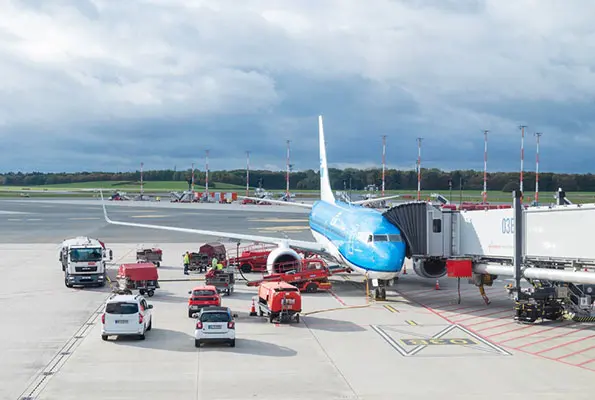
Air France-KLM, on the other hand, projected its 2026 fuel bill to be in a similar range, at about 8.9 billion euro.
The carrier also beat quarterly profit expectations on revenue gains from premium and long-haul travel and trimmed annual capacity guidance.
The airline group is now leveraging its premium offering and ticket price increases to sustain profits through the period of geopolitics-induced industry downturn. However, KLM termed the latest financial improvements “not good enough” to strengthen its financial foundations.
The Franco-Dutch group, for its second-quarter, posted an adjusted operating profit of 484 million euro (USD 552.5 million), down from 736 million euro in the same period in 2025 but higher than the 327 million euro consensus from analysts polled by the company.
“We delivered strong commercial performance on the back of steady demand for premium travel, notably on the Asian and North American markets,” said Benjamin Smith, Air France-KLM CEO.
KLM Chief Executive Marjan Rintel, on the other hand, said that global uncertainties, rising costs, and intense competition would continue to pose structural challenges for not only the airline but also the entire aviation sector.
“We must remain realistic: one good half-year does not make KLM structurally strong and robust,” Rintel said.
Lowering its full-year capacity expectations, Air France-KLM is now guiding for a 1% drop in short and medium-haul flights and a group increase of between 2% and 3%. That is a second cut from the 3% to 5% forecast made before conflict erupted in the Middle East.
Air France-KLM has also trimmed its April fuel bill projection by 4% to USD 8.9 billion, citing newer and more efficient aircraft as well as jet fuel hedging.
With 6.8 billion euro in net cash and 3.5 billion euro in undrawn credit lines at the end of June, the airline group, as per the analysts, could reap cheap consolidation opportunities as the geopolitical developments have nearly halved the sector’s 2026 profit forecast, while pushing weaker carriers toward restructuring or buyouts.
The group submitted a binding offer for a stake of at least 44.9% in Portugal’s TAP for an undisclosed price, competing with Lufthansa for a strategic partnership and access to TAP’s lucrative slots linking its Lisbon hub with Brazil, Portuguese-speaking African countries and the United States.