

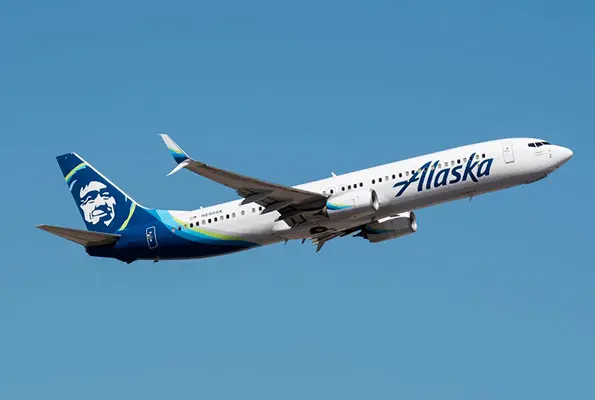
As the elevated jet fuel prices continue to pressurise the profit books of airlines, Alaska Air Group has made a bold bet on the premium travel segment by adding lie-flat seats, premium-economy cabins, and new airport lounges to earn more from travellers looking for comfort during their journeys.
Alaska Air Group’s President and Chief Financial Officer Shane Tackett, while interacting with Reuters, said the venture’s premium travel-related investments could eventually add USD 3 to USD 4 to Alaska’s earnings per share and lift its margins by 2 to 3 percentage points in the next two years.
As per Tackett, Alaska’s estimate assumes “a pretty steady rate of demand” for premium seats and the prices it expects to charge.
The budget airline will also seek to enter joint ventures with other airlines across the Atlantic and Pacific, with the goal of coordinating schedules and fares and sharing revenue on international routes.
Alaska has already submitted filings with the US Transportation Department for a Pacific joint venture.
The budget carrier is also in reported talks with American Airlines to deepen their existing partnership by bringing Alaska into American’s transatlantic joint venture with British Airways, Iberia, and Finnair and its Pacific partnership with Japan Airlines.
Alaska has kept the premium push at the center of its organisational transformation after the venture’s 2024 acquisition of Hawaiian Airlines, which added widebody aircraft and a larger Pacific network for international expansion.
Alaska expects the investments to push premium revenue to more than 40% of total revenue by 2030, from a projected 36% in 2026.
“Beginning in 2028, Alaska plans 12 lie-flat Aurora Suites on each of at least 25 Boeing 737 MAX 10s used on select transcontinental routes. It will add Premium Reserve, a premium-economy cabin, to Boeing 787s, Hawaiian’s Airbus A330s and some MAX 10s,” Tackett said.
Alaska also plans new passenger lounges in Seattle, Honolulu and San Diego airports.
In January this year, a month before the Iran war began, Alaska forecast a profit per share in the range of USD 3.50 to USD 6.50. However, as the global energy shock kicked in from March onwards, the airlines pulled back its outlook in April, taking note of the surge in fuel prices.
Tackett said Alaska’s business is configured to perform strongly at prices of about USD 3.25 a gallon or lower. The carrier estimates earnings of USD 5 to USD 6 a share in 2027 with fuel at USD 3.25 and more than USD 10 at USD 2.50.
Alaska is also targeting up to USD 4 billion in annual cash payments from banks and other partners for its loyalty programme by 2030 and plans to launch an Atmos debit card in 2027.
As part of its broader organisational transformation, Alaska is also looking to serve 15 long-haul international destinations from Seattle by 2030, up from an earlier goal of 12.
Tackett said Alaska needs to offer international flights and premium products from Seattle to retain and grow customer loyalty.