

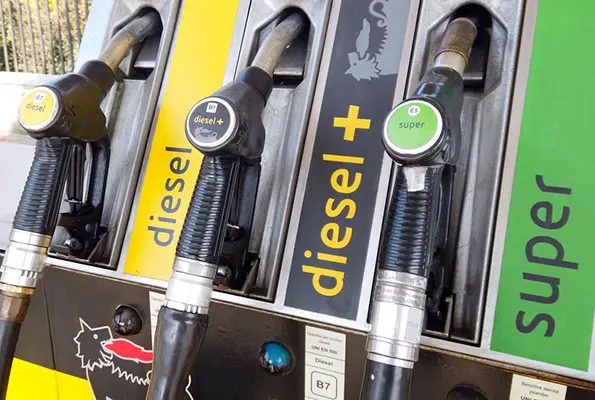
Washington, throughout the last week, led a pressure campaign on the European Union (EU) to draw down emergency diesel inventories, with the Trump administration warning that failure to act could lead to an American ban on the commodity’s exports.
Europe, which has sanctioned the direct seaborne imports of Russian diesel since 2023, has become increasingly reliant on American supplies, a decision that has only led to high economic costs on the bloc.
Trump, on the other hand, is seeking to cool surging fuel prices ahead of the November midterm elections, as inflation and increasing cost of living dictate the narrative among the disgruntled voters.
While Trump had previously expressed support for a diesel export ban, he reversed his stance last week, stating to reporters at the White House that the plan was never truly under consideration.
“Europe has a lot of diesel, and they’re going to be making a major world contribution, and so are we. And we’re not going to be doing the export ban. We’re going to be doing what we’re supposed to do,” Trump said.
The International Energy Agency (IEA) coordinated the largest emergency stock release ever, totaling 400 million barrels, in March due to the Iran war.
While the EU has put a ban on the seaborne import of the diesel from Russia, Moscow too has decided to withhold the remaining diesel from global markets until Western sanctions are lifted.
“Taking into account commitments that have already been fulfilled, we will implement our commitments with a coordinated release through the IEA of 100 million barrels,” the G7 said in a joint statement.
“The release will begin immediately and last four months, with a substantial amount of diesel to be released within 20 days by G7 members and partners,” the statement added further.
IEA Executive Director Fatih Birol said last week that members had released about two-thirds of the 400-million-barrel agreement.
“We will convene in the context of the IEA in the coming days to discuss the possibility of additional diesel releases as necessary,” the G7 said.
“Europe has just agreed to release a massive amount of their heavily stocked Diesel Oil. The process will begin immediately,” Trump wrote in a post on Truth Social.
As high energy prices and inflation emerge as the main narrative ahead of the midterms—a phenomenon that will determine whether the Republicans maintain control of the US Congress until the 2029 presidential polls—Trump is seeking to lower fuel prices while facing a career-low approval rating across all major opinion polls, with voters from both parties becoming vocal about the administration’s failure to manage the economy.
The White House is preparing an executive order to tackle record-high US diesel prices that could be unveiled as early as next week, as per a Reuters report.
The order is expected to include measures to expand the use of tax-exempt red-dyed diesel and other tax changes to lower fuel costs.
The G7 has asked its member countries to refrain from imposing export restrictions on energy products among themselves, a move the block sees easing pressure on the Trump administration to impose a US diesel export ban.
Europe has already boosted its imports of US diesel this year as the Iran war disrupted supply from Gulf producers.
EU governments had discussed on Friday a proposal by France for European countries to release 50 million barrels of diesel and for IEA members to release 50 million barrels of crude oil.
“A 50-million-barrel release of diesel would equate to approximately 17% of the EU’s total emergency stocks of diesel and gasoil, or about 3% of the bloc’s annual consumption,” stated the Eurostat data.