

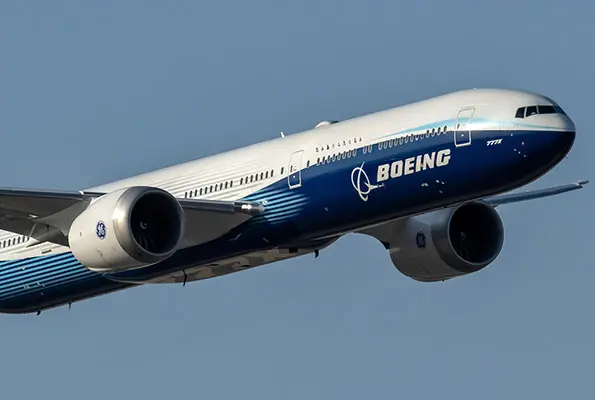
American aviation giant Boeing, already in the news over the update of the business cutting 5% of its global workforce, delivered 49 commercial aircraft in October 2026, down from 57 in September and 53 in the same month in 2025, as the US planemaker continues to face production and supply-chain challenges.
However, the company recorded its strongest October for net orders since 1997, securing 165 new aircraft orders without any cancellations.
Most of the fresh orders came from aircraft lessor Avolon, which placed an order for 140 Boeing 737 MAX jets.
The remaining orders included six 737 MAX aircraft for Allegiant Air, four for unidentified customers and 15 Boeing 787 Dreamliners for undisclosed buyers.
While the demand for Boeing’s aircraft remains strong, the company is still working to ramp its production activities and meet delivery targets.
Boeing delivered 32 737 MAX aircraft in October, compared with 43 in September.
The deliveries also included 11 787 Dreamliners, two 777 freighters and three 767 aircraft, one of which was destined for Boeing’s KC-46 military tanker programme.
Chief Executive Kelly Ortberg said last month that Boeing would miss its target of delivering approximately 500 737 aircraft this year.
The American aviation giant is working towards increasing monthly 737 production to 47 jets, a rate Ortberg expects it to achieve in early 2027.
However, production remains constrained by supply chain difficulties.
Wing manufacturing for the 737 programme continues to be a bottleneck, while a dispute with a supplier has disrupted wing production for the 777 freighter and 767 programmes.
Through October, Boeing delivered 524 aircraft, approximately 6% more than the 493 jets handed over during the corresponding period last year.
Boeing is still trailing behind its European competitor Airbus, which delivered 621 aircraft in the first ten months of 2026, despite the improvement.
Air New Zealand received two Boeing 787 Dreamliners in October, even as it awaits European regulatory certification for its Skyrest sleep pods designed for economy class, according to the airline and media reports.
Alongside its production challenges, Boeing is also continuing efforts to strengthen its safety culture as it prepares to increase aircraft output.
Don Ruhmann, the company’s chief aerospace safety officer, told the International Aviation Safety Summit in Montreal on Tuesday that maintaining direct communication with factory workers would be essential as production expands.
Ruhmann further cautioned against relying exclusively on dashboards and formal reports to identify potential safety issues, arguing that employees on the factory floor are often the first to encounter problems and raise concerns.
Ruhmann said workers must feel that their concerns are heard, respected and protected if Boeing expects them to continue reporting safety-related information.
The comments come as Boeing’s safety practices remain under scrutiny following the January 2024 incident in which a door plug detached from a nearly new 737 MAX aircraft.
The company had also faced intense criticism after two fatal 737 MAX crashes in 2018 and 2019.
Boeing is currently working with the US Federal Aviation Administration (FAA) to increase 737 MAX production while addressing manufacturing and supply chain issues.