

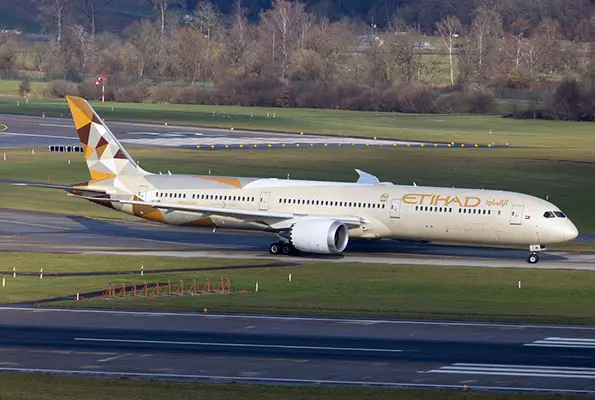
Despite the ongoing volatile geopolitics due to the Iran war, Etihad Airways has managed to keep its passenger-carrying capacity on the greener territory, with the ratio going higher than a year ago.
According to CEO Antonoaldo Neves, the Abu Dhabi-based carrier’s available seat kilometres, the industry’s standard measure of passenger-carrying capacity, were 15% to 17% higher than they were in the same period in 2025.
With this, Etihad has managed to beat the industry trend, in which its global peers have found it difficult to recover from disruption due to the Iran war, which has affected their revenues.
As per Neves, the load factor, which measures how well an airline is filling available seats, was 92% in August.
Etihad is now targeting an 87%-plus load factor for the remainder of the year.
“We are back on track,” he told Reuters.
While the Iran war, since its beginning in February 2026, has disrupted flights in the Middle East and beyond, the region’s carriers, some of the world’s biggest, have gradually resumed their activity.
“Etihad expects to post flat revenue this year compared to 2025 as a result of the airspace closures in March and April, while profitability is expected to be almost zero,” Neves said, while blaming factors like trade disputes and visa restrictions causing further travel disruptions.
“You have a global situation. I mean, the decisions that the US and Canada are taking on visas are impacting us here,” he said, pointing to lower traffic from India towards Canada and the US, including from students.
Neves was, however, upbeat about the upcoming winter season, although he said demand was shifting and more people were making late bookings—echoing similar views from his peer Emirates.
Etihad, on Monday, made public a new cabin design across first, business and economy classes for its existing Airbus A321 LR aircraft as well as for its A330s, which Neves said could be delivered in the middle of 2027.