

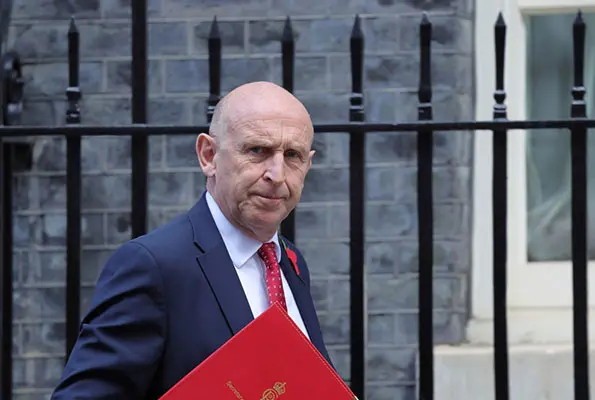
UK Chancellor John Healey is poised to raise taxes on Britain’s banks in his October 28 budget, seeking additional revenue to protect the government’s deficit-reduction plans as rising borrowing costs and the economic fallout from the Middle East conflict put pressure on public finances.
The proposed increase is expected to involve reversing a reduction in the surcharge banks pay on their profits, potentially restoring the rate to 8% from its current 3%. The measure could generate about 2.25 billion pounds annually, according to estimates cited by the Trades Union Congress (TUC), although the final details have yet to be announced.
The move would allow Healey to raise revenue without breaking Labour’s election pledge not to increase the main rates of income tax, value added tax, and employee National Insurance contributions.
It would also offer the government a way to demonstrate fiscal discipline while seeking to ease pressure on households and businesses from higher energy costs.
The prospect of higher taxation has unsettled investors. British banking shares fell on Friday after reports of the planned budget measure emerged.
Barclays, Lloyds Banking Group, and NatWest were down between 0.2% and 1.8% in early trading, underperforming eurozone banking stocks, which rose 0.9%, Reuters reported.
The potential tax increase arises from the government’s diminishing flexibility. The fiscal headroom Rachel Reeves had built up against Labour’s fiscal rules stood at £24bn at the time of the March forecast.
Rising government borrowing costs have threatened to erode that buffer substantially, with estimates suggesting it could have fallen to between 8.5 billion pounds and 16 billion pounds.
Higher gilt yields increase the cost of servicing Britain’s substantial public debt, leaving the Treasury with less flexibility to accommodate additional spending or respond to economic shocks. The government is also confronting the inflationary consequences of the Middle East conflict, including higher energy prices, which threaten to squeeze household budgets and business margins.
Banks have emerged as a potential source of additional revenue partly because of their strong earnings recently. Britain’s four largest lenders—HSBC, NatWest, Barclays, and Lloyds Banking Group—have generated a combined 200 billion pounds in pre-tax profits over the past five years, according to figures reported by The Guardian.
Higher interest rates have helped lenders increase income from loans and other interest-bearing assets, although the benefits vary across institutions and are accompanied by higher funding costs, credit risks, and pressure on borrowers.
The existing bank surcharge is levied in addition to the standard corporation tax rate. Former Conservative chancellor Jeremy Hunt reduced it from 8% to 3%, a change that the TUC says has cost the public purse billions of pounds in foregone revenue.
TUC general secretary Paul Nowak has urged Healey to ensure that banks make a greater contribution to public finances.
“Britain’s big four banks are making a billion pounds a week while bonuses have hit a post-crash record,” Nowak said, arguing that strong earnings had been supported by high interest rates while households faced mortgage pressures.
The union has advocated a much larger increase, proposing a surcharge of 16%. It estimates that such a measure could raise 24 billion pounds over four years. The government, however, is not committed to adopting the TUC’s proposal, and a return to the previous 8% rate is understood to be a more immediate possibility.
Other policy proposals have focused on the threshold at which the surcharge applies. Specialist lenders, such as Revolut and Shawbrook, have reportedly advocated for raising the profit threshold from 100 million pounds to 500 million pounds. Such a change could limit the impact on smaller or newer banking businesses while leaving larger institutions more exposed to the levy.
The industry has warned that further taxation could undermine Britain’s attractiveness as a financial center. Banking executives and industry groups have lobbied the Treasury against additional levies, arguing that higher costs could discourage investment, affect recruitment, and encourage some businesses to expand elsewhere.
Jamie Dimon, chief executive of JPMorgan Chase, has previously warned that a less favourable business environment could jeopardise the bank’s plans for a £3bn London headquarters. The project is expected to accommodate more than half of the US bank’s 23,000 UK employees.
The Confederation of British Industry has similarly cautioned against additional sector-specific taxes, arguing that financial services play an important role in investment, innovation, and business growth.
Industry representatives contend that predictable taxation is essential if the government wants to strengthen Britain’s position in global financial markets.
Healey has nonetheless emphasized the importance of viewing banks as integral to the broader economy. Speaking during meetings in Bangkok, he described financial institutions as important to Britain’s economic prospects while declining to rule out additional taxation.
The challenge for the chancellor will be to raise revenue without weakening investment or reducing the competitiveness of a sector that contributes significantly to employment, exports, and tax receipts.
The budget is also expected to address support for households and businesses facing higher energy prices. Healey has said government departments will need to work within the spending allocations established at the previous spending review, leaving limited scope for additional expenditure without corresponding savings or revenue.
Conservatives have opposed the prospect of a further tax increase, arguing that the financial sector already faces a relatively high tax burden compared with competing international centers. They have urged the government to prioritise spending restraint and economic growth instead.
For investors, the immediate concern is not only the size of any increase but also its effect on lenders’ future profitability and capital allocation.
Banks with greater exposure to the domestic UK market could be particularly sensitive to changes in the surcharge, although the ultimate impact will depend on the final policy and each institution’s earnings profile.
Healey’s October 28 Budget will determine whether the government proceeds with the proposed increase and how it balances the need for additional revenue against its ambition to encourage growth.
Until then, the prospect of higher bank taxation is likely to remain a source of uncertainty for Britain’s financial sector and its investors.