

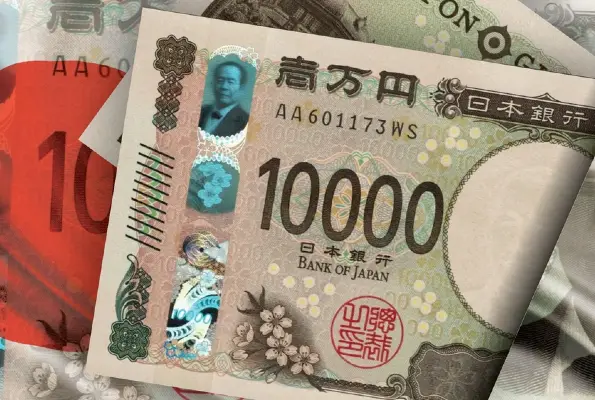
Japan ended up spending a record 15.4 trillion yen (USD 96.5 billion) intervening in foreign exchange markets in July to support the local currency, showed the latest Finance Ministry data.
Tokyo is desperately trying to pull the Japanese currency away from four-decade lows, with the yen’s weakness threatening profits at Japan’s heavyweight exporters and pushing up import costs, including for energy.
Japan imports almost all its energy, with 95% of that coming from the Middle East. The Gulf dependency also exposed Japan to significant supply disruptions caused by the Iran war.
However, the relatively slow pace of Bank of Japan (BOJ) policy tightening has kept Japan’s interest rates low compared with markets such as the United States.
The central bank held rates steady at its last meeting in July. However, policymakers have signaled a willingness to step up the pace of monetary policy tightening. Markets have assigned 65% odds to a hike at the next meeting in September.
For the period spanning July 30 to August 26, BOJ entered the market to buy yen, including rare joint action with the United States, as the Japanese currency plumbed its weakest levels in 40 years near 164 per dollar.
The Bank of Korea also timed its own won-buying intervention with Japan’s to amplify the effectiveness.
The intervention on July 30 could have been as much as 9.6 trillion yen, far surpassing the current confirmed daily record of 6.3 trillion yen from April 30, 2026. The Japanese currency then shot from around 163 per dollar to as strong as 155.20 by August 3, before stabilizing around 159.50, where it has been stuck since August 10.
To convince markets about Japan’s continued capacity for large-scale intervention, Washington has suggested Tokyo use a COVID-era Federal Reserve backstop for major central banks.
The Fed facility, introduced in 2020 to steady markets during the pandemic, enables Japan to raise dollar liquidity without outright sales of US Treasuries.
However, former top currency diplomat Naoyuki Shinohara sees Japan’s yen rescue as having echoes of the 1990s Asian financial crisis.
“The situation brought back memories of the Asian financial crisis in the late 1990s, when access to dollar liquidity became a critical issue across the region,” Naoyuki Shinohara said.
Back then, the United States, Japan, and the International Monetary Fund (IMF) provided dollar funding to Thailand to bolster the Southeast Asian country’s foreign reserves.
“Japan today is nowhere near Thailand’s situation. But the dynamic is uncomfortably similar,” said Shinohara, who served as the IMF’s deputy managing director after a stint as Japan’s vice finance minister for international affairs.
“Being asked by Washington to use swap lines and avoid selling Treasuries evokes memories of that period,” he told Reuters in an interview.
Shinohara noted that the joint action by Japan and the US on July 31 to support the yen was very different from the usual ways countries work together on currency issues, explaining that past coordinated interventions were based on a common understanding among major economies about currency changes and were supported by statements from G7 countries.
“There is no sign that such a process took place this time. Normally, there would be a joint statement from the G7 at some stage, but we haven’t seen one yet,” he observed.
In Shinohara’s opinion, the joint action was also unusual due to the near absence of central banks, which typically work in tandem with the finance ministries.
“Messaging is the most important element of coordinated intervention. Without central banks, the message is not compelling,” he said.
“The U.S. participation was a symbolic gesture with a hidden message urging Japan to get its act together on policy, including speedier rate hikes by the Bank of Japan,” Shinohara opined.
Shinohara also advised the BOJ to assess the need to raise interest rates to at least around 1.5% from the current 1% as soon as possible. However, one or two additional rate increases would probably not be enough to reverse the currency’s downtrend.
“Instead, external factors could help prop up the yen, such as a slowdown in U.S. growth or easing tensions in the Middle East that reduce the cost of importing oil,” Shinohara remarked.
“The one thing that must be avoided is a rapid depreciation of the yen. A country does not collapse because its currency gets stronger. It runs into trouble when its currency becomes too weak,” he concluded.