

Think about the hour after a car accident. Nobody is hurt, but the day has stopped. There is a damaged car on the side of the road, a meeting that will not happen, someone waiting at home, and one question that sits above all the others: how long until life gets back to normal?
For Wataniya Insurance, that question is the whole point. The company, headquartered in Jeddah and listed on the Saudi Exchange, sums up its purpose in four words: We Keep Saudi Moving. Behind the line sits a simple promise to every customer. Protect what we can. Restore what we can’t.
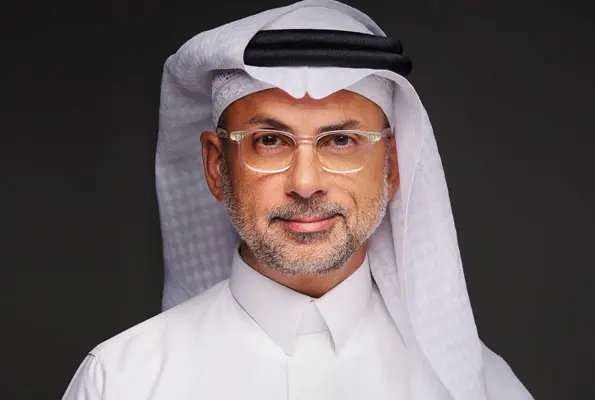
It is this promise, more than any single system, that Global Business Outlook has now recognised twice. Wataniya has received the award for Most Innovative Digital Transformation Implementation – Insurance, and its Chief Executive Officer, Mr. Haitham Habib AlBakree, has been recognised for Most Innovative CEO Strategies in Digital Transformation. One award looks at what the company has built. The other looks at the thinking that decided what to build in the first place, and what to leave alone.
A promise before a platform
Most transformation stories in insurance follow a familiar script. A company buys new technology, moves its forms online, launches a portal, and measures progress in systems replaced. Wataniya went about it the other way round. It started by asking what customers actually need from an insurer, and only then asked what technology could do about it.
The answer came back in two parts. People need to be protected from losses they cannot carry on their own. And when a loss does happen, they need their lives and businesses back as quickly as possible, with their dignity intact. Everything else, from data to digital channels, is judged by how well it serves one of those two jobs.
“Digital transformation has never been about technology for its own sake,” says Mr. AlBakree. “It has been about a single promise: to keep Saudi Arabia moving by protecting what we can and restoring what we can’t, with dignity and speed.”
That framing matters because it gives the whole organisation one test to apply. A new capability is worth pursuing if it protects more people, restores them faster, or makes the company strong enough to keep doing both. If it does none of those things, it waits, however impressive it looks.
Protect, part one: reaching more people
The most basic form of protection is also the one most often overlooked: making sure people are covered at all. An uninsured family, a small business without the right policy, a driver carrying a risk they could never absorb alone. Each of them is a loss waiting to happen, and none of them is helped by a faster claims process if they never had a policy in the first place.
Widening access across the Kingdom is, in Wataniya’s view, protection in its most fundamental form. It is also where digital capability does some of its most useful work. Simpler buying journeys mean a customer can understand what they are getting without someone explaining every clause. Clearer language removes the worry that the small print is hiding something. Pricing built on better data allows the company to offer fair, affordable cover to customers who were once hard to reach or hard to price.
The effect runs across the customer base, from small and medium enterprises taking out cover for the first time to commercial clients and individual policyholders. For a company whose history goes back half-a-century, much of it spent serving businesses, building direct and lasting relationships with individuals and families is a significant shift. Digital channels are what make that shift practical.
Protect, part two: reducing the loss before it happens
Reaching more people is the first step. The next is more ambitious. Wataniya is using technology and better data to help customers reduce the interruption before it happens, lowering the risks they face day to day and, where possible, avoiding the loss altogether.
This is a different idea of what an insurer is for. Traditionally, insurance starts working once something has gone wrong. A protection mindset asks whether the insurer can be useful earlier: helping a business understand where its exposures lie, giving a customer clearer information about the risks attached to their cover, and using what the company learns from every claim to help others avoid the same outcome.
This is the part of the journey with the most road still ahead, and the company is open about that. But the direction is set, and it follows naturally from the promise. From the customer’s point of view, the best claim is the one that never needs to be made.
Restore: the moment of truth
Insurance proves its value in the hardest moments. An accident, a fire, a hospital visit, a business brought to a halt. In those moments, customers are not thinking about premiums or policy wordings. They want to know that someone is on their side and that the problem will be handled quickly and fairly.
This is where Wataniya’s transformation is most visible to the people it serves. The company has rebuilt its claims and service journeys from the customer’s side of the table. Steps that once meant repeated visits, phone calls, and paperwork have been simplified or moved online. What used to involve long waits now moves in a fraction of the time.
Speed alone, though, was never the goal. A fast process that leaves a customer confused, or feeling like a case number, is not a good one. The measure Wataniya holds itself to is how quickly it gives someone their life back, and how that experience feels along the way. Clear updates, a known next step, and a fair outcome matter as much as the clock.
It is here, more than anywhere, that the promise stops being a line on a wall and becomes something a customer can feel.
Resilience: the strength to keep the promise
A promise is only as strong as the ability to keep it, year after year, through good markets and difficult ones. Much of Wataniya’s investment has gone into work customers never see directly, but benefit from every time they deal with the company.
Better data and analytics sharpen its decisions and its pricing, so that risk is understood more accurately and customers pay a fair price for the cover they need. Stronger controls protect honest customers from carrying the cost of fraud, which in any insurance market is ultimately paid for by everyone else. And a more connected digital experience is bringing the whole customer relationship into one place, so that a customer’s history, policies, and requests are seen together rather than in separate pieces.
None of this makes headlines on its own. Together, it is what turns protection and restoration from occasional good experiences into something people can depend on. Inside the company this is simply called resilience: the strength to keep the promise.
The strategy behind the award
The recognition of Mr. AlBakree points to the discipline that runs through all of this. Technology at Wataniya is judged by what it does for people, not by how advanced it appears.
That sounds straightforward. In practice it is one of the harder habits for any organisation to hold on to. New tools arrive constantly, each with a persuasive case behind it, and the pull to adopt them simply because others are doing so is real. A capability does not create value just because it is new. The question Wataniya asks of each one is always the same: does it protect more people, restore them faster, or strengthen our ability to keep doing both?
The test does two useful things. It keeps the transformation focused, because investment follows purpose rather than fashion. And it keeps the conversation honest, because it gives everyone, from the boardroom to the front line, the same language for deciding what matters.
Owned by the people closest to the work
The second part of the strategy is about ownership. Transformation that lives only in a strategy document rarely survives daily operations. At Wataniya, the view is that the people closest to the work, in claims, in customer care, in underwriting, and in operations, are the ones who see most clearly where things can be better.
Leadership sets the direction and the standard. Real progress depends on teams across the company feeling responsible for it, and having the room to act on what they see. That shared ownership is what keeps improvements coming long after the launch announcements have faded.
“This achievement belongs to our people,” Mr. AlBakree says. “Their ideas, their collaboration, and their commitment are what turn strategy into something a customer can actually feel.”
Technology with empathy
Insurance is becoming more digital. It should not become less personal. That tension sits at the centre of how Wataniya designs its service.
Customers want convenience and speed, but they also want to be understood, especially in an industry where unfamiliar terms and complex conditions can cause real anxiety. A notification that arrives at the right moment and says clearly what happens next is worth more than a sophisticated feature nobody understands. Plain language, accessible service, and the option to speak to a person when it matters are what turn technology into reassurance rather than one more layer of complexity.
The approach is deliberate. Digital channels handle what they do best, routine tasks done quickly and accurately, so that people are free to focus on the moments that call for judgement and care.
“Insurance is becoming more digital. It should not become less personal.”
Part of a bigger national story
Wataniya’s transformation is taking place at a moment of wider change. Under Vision 2030, Saudi Arabia is modernising its financial sector, growing its private sector, and raising expectations of what services should feel like for citizens, residents, and businesses alike. Insurance sits close to the centre of that shift because a growing economy needs people and enterprises that can take risks with confidence.
Seen in that light, keeping Saudi Arabia moving is more than a slogan. Every business that recovers quickly from a disruption, every family back on the road after an accident, and every small enterprise that can afford the cover it needs adds a little to the Kingdom’s momentum. That is the contribution an insurer is in a position to make, and it is the one Wataniya has chosen to organise itself around.
The work continues
Two awards are a milestone, not a destination. Customer expectations will keep evolving, and so will the tools available to meet them. The company is clear that some of its most important work, particularly in helping customers avoid loss before it happens, still lies ahead.
What will not change is the test. Wataniya will protect what it can, restore what it can’t, and use technology only where it makes a real difference to the person relying on it.
“Being recognised by Global Business Outlook tells me we are keeping that promise,” Mr. AlBakree says, “and building the resilience to keep it for years to come. As Saudi Arabia advances with ambition, we will keep our focus where it belongs: on the people we protect, the people we help restore, and the people who serve them every day.”
That, in the end, is what these awards recognise. A company that has decided what it is for, and is using digital capability to keep Saudi Arabia moving, one person at a time.