

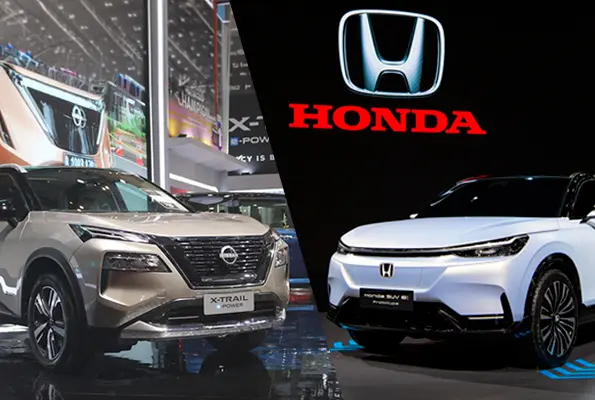
As per the reports, the Japanese automaker has instructed suppliers to drastically reduce their prices while looking to roll out joint vehicle software with Nissan in 2029.
The news emerges at a time when the Japanese auto industry is facing its biggest existential crisis, with the intense trade warfare between the United States and Canada putting the future of the North American market under tremendous uncertainty.
Honda expects its EV-related losses to ultimately total more than USD 12 billion, one of the biggest hits among global automakers, and is now shifting its focus to gasoline-electric hybrids.
In May it reported its first-ever annual loss as a publicly traded company.
Honda, known for its flagship CR-V sport-utility vehicle, now aims to save 1.5 trillion yen (USD 9.4 billion) by 2030, reported Reuters.
The automaker is currently working with suppliers globally to improve competitiveness and reduce costs, including through the use of standardised parts.
In a reported meeting held at a convention center in Utsunomiya, a city north of Tokyo near the automaker’s R&D facility, Honda managers met with the company’s major suppliers, during which the latter was asked to source more components from Chinese suppliers.
Suppliers, from their part, presented with company-specific cost-cutting targets.
Honda is aiming to reduce costs by 30% in three key parts categories: pressed and forged components, electrical parts, and parts related to software-defined vehicles (SDVs). Such a reduction, as per Honda’s projections, would allow Japanese suppliers to better compete with Chinese rivals.
Honda’s direct suppliers, or “tier-one” suppliers, have been asked to review their procurement methods while being requested to use standardised parts sourced from second- and third-tier suppliers to help keep costs down.
The tie-up with Nissan will see the duo jointly developing standardised electronic control units (ECUs) for software-defined vehicles (SDVs), deepening their collaboration on more advanced car technology.
“The companies plan to introduce an architecture incorporating the jointly developed ECUs and software in next-generation vehicles from the 2029 financial year onwards,” Nissan and Honda said in a joint statement.
The agreement gives fruition to the 2024 talks, in which the duo announced their intention to jointly research next-generation software platforms. In the meantime, they considered merging to create the world’s fourth-largest automaker but ultimately abandoned the idea.
The new partnership aims to establish common specifications for core ECUs within their vehicles’ electrical and electronic architecture, as well as operating systems and parts of the middleware and vehicle-control software.
As Honda keeps on fighting the headwinds like US import tariffs and higher labour expenses, CEO Toshihiro Mibe, in June, won support for his reappointment to the automaker’s board.
While former Honda executives have been in favour of Mibe resigning over the company’s poor performance, the automaker also faces the growing need to invest in research and development of technology as cars become more advanced, raising costs across the industry.