

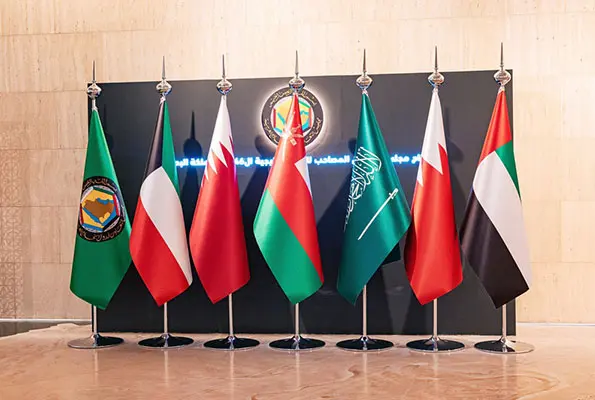
As the Iran war shows signs of ending, with both Washington and Tehran announcing a peace deal, there is good news for the GCC (Gulf Cooperation Council), as a latest report from the Institute of Chartered Accountants in England and Wales (ICAEW) and Oxford Economics says that the region’s economies will rebound in 2027 after contracting in 2026, as the regional conflict weighed on energy exports, tourism, and investor sentiment.
“The GDP of the six-nation bloc is predicted to grow by 8.1% in 2027 as energy trade routes normalize, travel demand returns, and business confidence rebuilds,” stated the “Economic Insight: Middle East Q2 2026 Report.”
While the United States and Iran are set to sign a formal peace pact on June 19, in line with the report’s baseline scenario, the economic contraction in 2026 in the Gulf region mirrored the scale of disruption to energy production and trade flows.
“GCC oil sector output is forecast to decline by 14.5% in 2026, the steepest decline in several decades, but a strong 23.5% rebound is projected for 2027 as output recovers from a severely depressed base,” said the ICAEW and Oxford Economics.
“Saudi Arabia and Oman are expected to be the least negatively affected GCC economies this year, with both forecast to continue expanding. Meanwhile, Saudi Arabia and the UAE have been able to reroute some exports through alternative pipelines, helping cushion the impact relative to other GCC producers. Average Brent crude oil prices are forecast at USD 90 per barrel for 2026, from USD 90.2 projected three months ago,” the report further added.
GCC non-energy sectors, on the other hand, are expected to contract by 1.1% in 2026 before recovering in 2027 and beyond.
“Inbound tourist arrivals to the GCC are projected to fall by around 30% in 2026, leading to tens of millions fewer visitors and tens of billions of dollars in lost spending across the region. Recovery in this sector is expected to take longer than energy, given the sensitivity of travel demand to accessibility and confidence, the report said. However, medium-term confidence in regional tourism growth remains intact,” ICAEW and Oxford Economics observed.
The report expects no lasting damage to the GCC’s strong credit profiles from the Iran war, with Gulf sovereigns and government-affiliated entities expected to return to international debt markets as soon as the ceasefire kicks in.
“Despite the supply disruption due to the Iran war, inflationary pressures remain relatively contained across the region. GCC CPI inflation is predicted to average 2.6% in 2026, with food prices the main source of upward pressure. Price pressures are expected to be largely transitory, with average inflation easing to 2.1% in 2027 as temporary supply-side factors dissipate,” the report concluded.