

The ongoing crisis, triggered by the Iran war, will push countries to move ahead with their agendas of raising biofuel blending mandates, said a study co-authored by London-based think tank Chatham House and non-profit certification group the Forest Stewardship Council (FSC).
As per the report, global biofuels output is expected to surge nearly 70% by 2030 from 2025 levels, with products like ethanol becoming massively popular among the leading biofuel producers.
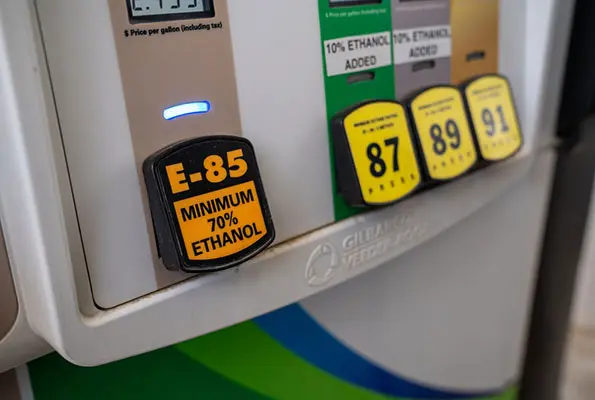
“Ethanol can be produced from a range of organic feedstocks but is typically made from food crops or animal feed. They are commonly blended with gasoline or diesel and become more competitive as fossil fuel prices rise,” the study, authored by Dr. Patrick Schroder, Senior Research Fellow, Environment and Society Centre, and Bhargabi Bharadwaj, Research Associate, Environment and Society Centre, noted.
While the fuels have long remained at the center of debate over whether they help tackle climate change or contribute to food inflation and deforestation, the study’s authors see the latest demand surge risks worsening the latter.
“By prioritizing energy security in the short term, some policy responses may be trading off against increased food insecurity in the medium term (and) any additional shock such as extreme weather could severely affect food prices,” Chatham House and FSC noted.
Countries including Brazil, China, India, Indonesia, and the United States, along with the European Union (EU), have either proposed or adopted higher biofuel blending mandates since the beginning of the Iran war, as energy trade through the strategically important Strait of Hormuz comes to a near-halt.
As per the study’s estimates, if the leading producers implement all or most of the proposed mandates, the land needed to produce biofuel feedstocks could more than double by 2030 compared with 2023 levels.
“That would require an additional 36 million hectares, an area roughly the size of Germany,” Chatham House and FSC said.
“The speed at which biofuel mandates are being increased creates significant risks, as demand for feedstocks may rise faster than environmental safeguards, certification systems, land-use planning, and enforcement mechanisms can be implemented,” Schroder and Bharadwaj said.
“Feedstocks grown on degraded land or between crop seasons can help reduce land degradation and even restore land, but that is not typically the case for conventional, or first-generation, biofuels,” the duo added further.
While the first-generation biofuels are made from food and feed crops such as corn and sugarcane, the second-generation, or the advanced variant, gets sourced from organic residues and waste materials such as used cooking oil.
“Production of feedstocks for first-generation biofuels tends to have net negative consequences for land degradation, food security, and water use,” the authors concluded.