

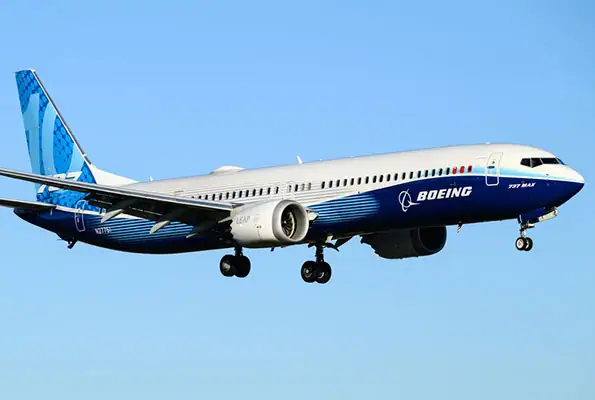
In what seems to be excellent news for Boeing, the United States Federal Aviation Administration (FAA) has said that its panel of experts had determined a software glitch in some 737 MAX flight computers poses no safety concern, clearing the way for approval of the best-selling narrow-body jet’s largest variant, MAX 10.
While the decision removes another layer of obstacle to the MAX 10’s already delayed certification, the news should also ease concerns among the airlines that fly the MAX 7, a variant that uses the same software and was certified by the FAA in August this year.
The technical determination of the FAA’s Corrective Action Review Board, that met in Seattle on Friday, was based on the fact that “pilots retain full control of the aircraft and the indications to the flight crew are clear and unambiguous.”
The completion of the software analysis was kept as a condition of the MAX 10 certification. The initial estimates indicated that the glitch might hinder pilots from accessing automated flight guidance during an unusual landing scenario.
Senior officials at the US regulator were alerted to it in August, nearly two years after Canadian carrier WestJet first flagged the issue to Boeing.
WestJet discovered the anomaly during an entry-into-service test flight, the airline said last Friday in a staff memo.
The vertical navigation mode, which automates a plane’s vertical flight path, was getting disengaged during landing approach.
Once the glitch kicks in, it can increase the pilot’s workload during a go-around, a situation in which a pilot aborts a landing attempt, applies power, and climbs to make another landing attempt.
WestJet, which expects to take the MAX 10 early in 2027, uses the affected software, U14.1, on its MAX jets.
“WestJet has received no reports of this condition occurring during normal line operations,” the memo said.
“Very few occurrences have been reported by other operators using U14 or U14.1 because the condition requires a specific sequence of events,” the document added further.
“We will continue to follow the lead of the FAA as our engineers work on the next software update,” Boeing said in its reaction to the latest FAA observation.
“We are also working with airlines to formalize a procedure that will allow pilots to re-enable automated vertical navigation should this situation occur,” the American planemaker added further.
Aviation officials now anticipate that the MAX 10 could receive certification as early as late October, aligning with previous expectations.
The same software used on the newly certified MAX 7 airplane could also have affected Southwest Airlines, in addition to WestJet.
Alaska Airlines and United Airlines have already given significant orders of the Max 10 variant. A Jefferies analysis estimates Boeing having nearly 1,500 MAX 10s on its order book.