

Asia may need to invest as much as USD 1 trillion annually in energy over the next 15 years to strengthen energy security, diversify supply and meet rising demand, according to a report by McKinsey & Company, as disruptions to oil and gas shipments through the Strait of Hormuz expose the region’s dependence on imported fuels.
The consultancy has raised its forecast for Asia’s energy demand in 2040 to just under 400 million terajoules, 15% higher than its estimate a year earlier.
The region is expected to account for about 70% of global net energy demand growth through 2040, driven by industrial expansion, urbanisation, rising living standards and the growing electricity requirements of data centres.
The revised outlook reflects a reassessment of energy security following the Iran war, which disrupted flows through the Strait of Hormuz, a critical route for international oil and liquefied natural gas shipments.
The disruption has prompted governments and companies to reconsider the risks associated with concentrated supply sources and long-distance energy imports.
For Asian economies, the challenge is to secure reliable supplies without undermining economic growth or making energy prohibitively expensive.
That will require investment across power generation, electricity grids, storage, fuel production and transport infrastructure, while governments balance the need for dependable supplies against longer-term decarbonisation commitments.
McKinsey expects the changing security environment to encourage greater investment in domestic oil and gas production, even where local projects cost more than importing fuel.
New investment could unlock an additional 10 billion to 15 billion cubic feet per day of gas production across South-east Asia, China and Central Asia, according to the consultancy.
Governments may be willing to support projects that would previously have struggled to compete with cheaper imported supplies.
Such a shift could benefit upstream producers, pipeline developers, engineering companies and equipment manufacturers, although higher-cost domestic production could put upward pressure on energy prices.
Natural gas demand is expected to slow over the next five to ten years as countries prioritise coal and renewables for electricity generation. Consumption could subsequently rebound as industrial demand increases.
Coal is also expected to remain an important part of Asia’s energy mix for longer than previously anticipated, with regional demand broadly flat over the coming decade as declining consumption in China is offset by growth in India and South-east Asia.
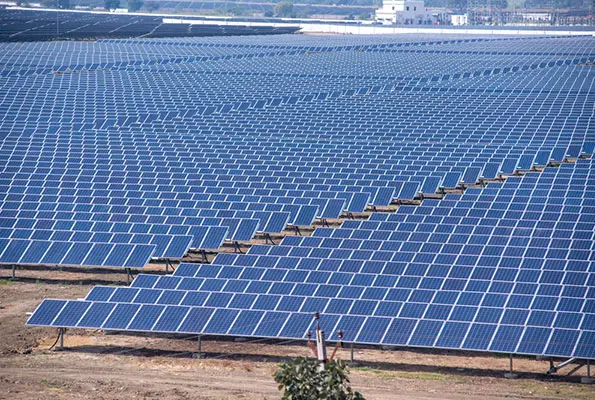
Renewable energy will nevertheless attract substantial investment. McKinsey expects annual investment in solar and wind power to reach about $300 billion through 2040, with India and South-east Asia among the markets driving expansion.
Domestic renewable generation can reduce exposure to imported fuels, but it requires complementary investment in transmission networks, storage and other infrastructure to maintain reliable electricity supplies.
The investment challenge extends beyond adding generating capacity. Electricity grids must be expanded and modernised to connect new power projects with industrial centres, cities and data centres. To manage fluctuations in renewable output and meet demand during low solar and wind production, we will also need storage systems and flexible generation.
The rapid expansion of artificial intelligence is adding another source of pressure. Data centres require large and continuous supplies of electricity, while cooling systems and industrial facilities are increasing demand throughout the region.
Governments and utilities must therefore plan for a power system that can accommodate both the electrification of existing activities and entirely new sources of consumption.
The scale of the required investment presents a financing challenge, particularly for developing economies. Large infrastructure projects require substantial upfront capital and long periods to generate returns. Higher interest rates, currency volatility and uncertainty over future energy prices can make projects pricier and discourage private investors.
Governments are likely to play a role in setting policy, supporting strategic infrastructure and creating conditions for private investment. Energy companies, infrastructure funds, banks and institutional investors will also be important sources of capital.
Stable regulations, credible project pipelines and predictable pricing arrangements will help determine whether the region can mobilise funding on the scale McKinsey envisages.
The wider opportunity extends across the energy supply chain, from exploration and production to refining, shipping, power equipment and renewable technology.
Stronger domestic supply could reduce exposure to geopolitical shocks and create opportunities for regional manufacturers and engineering firms.
However, greater self-sufficiency will not necessarily mean complete energy independence, given the scale of Asian consumption and differences in countries’ natural resources.
The International Energy Agency has also warned that the Middle East conflict is reshaping energy investment priorities, encouraging governments to diversify supply routes and expand access to domestically available resources.
Its 2026 outlook points to growing investment in electricity systems, storage, renewables, nuclear power and efficiency, alongside continued spending on oil, gas and coal.
The policy dilemma is that energy security and decarbonisation do not always point to the same immediate choices. Domestic fossil-fuel projects may offer dependable supply in the near term, while renewables can reduce exposure to imported fuels over time.
The balance will differ between countries according to their resources, industrial needs, financing capacity and ability to expand electricity networks.
For investors, the prospect of sustained spending offers opportunities across utilities, energy producers, infrastructure, engineering and equipment manufacturing.
But the returns will depend on project costs, regulatory decisions, fuel prices and whether demand develops as expected.
McKinsey’s forecast underscores the scale of Asia’s energy challenge: securing reliable supplies while powering economic growth will require sustained investment over many years.
The region’s response to the latest supply shock could reshape its energy mix, infrastructure and capital flows well beyond the immediate crisis.