

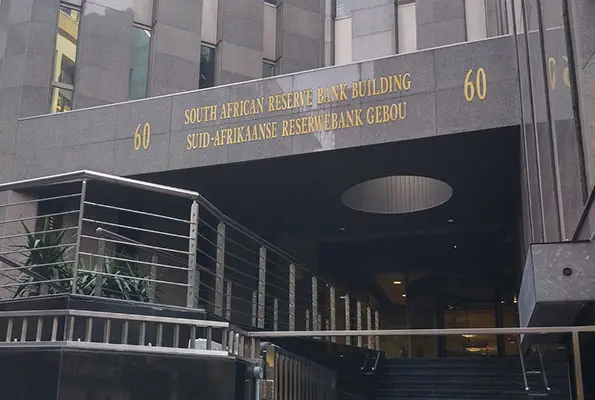
The South African central bank kept its key interest rate unchanged at 7.25% on Thursday despite rising inflation and higher fuel prices linked to the Iran war.
The decision reflects the central bank’s assessment that its monetary policy remains sufficiently restrictive following two interest rate increases earlier this year.
The South African Reserve Bank’s (SARB) Monetary Policy Committee (MPC) voted narrowly to maintain the repo rate, with four members supporting a pause and three favouring a further increase of 25 basis points.
Governor Lesetja Kganyago, while announcing the decision, said the central bank would remain cautious and was prepared to tighten monetary policy further if inflationary pressures persisted.
“With a moderately restrictive policy stance, we decided to pause for now. We are mindful of risks and will not hesitate to raise rates if needed to return inflation to target,” Kganyago said during a press conference.
Talking about South Africa’s inflation rate, the ratio has continued to move further away from the central bank’s 3% target.
Consumer inflation accelerated to 5.2% year-on-year in October, compared with 4.5% in September, marking its highest level in approximately two and a half years.
Transport inflation, which includes the all-important fuel costs, was the biggest contributor to the increase, accelerating to 15.2% from 10.8% in the previous month.
The African giant, which imports most of its fuel requirements, has been brutally exposed to price fluctuations due to the ongoing Iran war and the disruptions at the Strait of Hormuz.
The SARB has already raised its benchmark interest rate twice since the Iran war began in late February, seeking to contain inflationary pressures and maintain price stability.
A Reuters poll conducted before the October inflation figures were released showed that 24 economists expected the central bank to hold rates steady, while three forecast another 25-basis-point increase.
Although the SARB has opted for a pause, its warning that further hikes remain possible suggests that borrowing costs could stay elevated if fuel prices and broader inflation pressures continue to rise.