

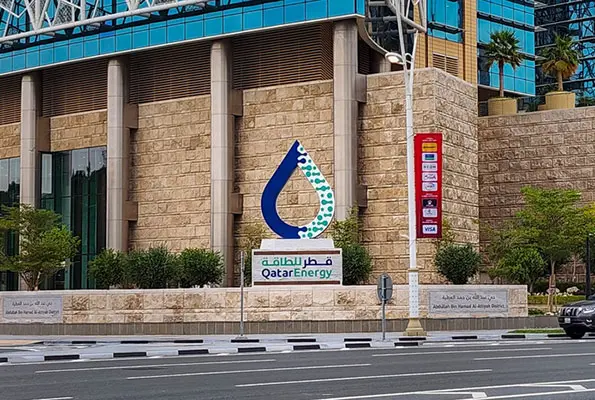
The first liquefied natural gas (LNG) train under QatarEnergy’s North Field East expansion project will be operation-ready by November, offering Qatar a path to restoring some output lost to Iranian attacks.
Launching the train would be a major milestone for the world’s largest LNG expansion project amid the Gulf country’s ongoing recovery from the damage caused by attacks on Ras Laffan in the initial months of the Iran war, which wiped out 17% of the country’s LNG capacity.
LNG production from the train is expected to start in the first quarter of 2027, as per a Reuters report.
QatarEnergy Chief Executive Saad al-Kaabi said in September that the project was expected to begin production in the first half of 2027 despite the geopolitical disruptions and export headwinds surrounding the Strait of Hormuz.
Iranian attacks in March on Qatar’s Ras Laffan facility damaged two LNG trains, along with one gas-to-liquids plant. While the repairs to the LNG trains could take three years to complete, the gas-to-liquid facility will finish its repairs in the first quarter of 2027.
“Despite the damage, Qatar would be able to resume normal gas operations within weeks once the strait reopens,” Kaabi said last month, adding that QatarEnergy is currently producing very little LNG.
Qatar, whose economy heavily relies on LNG exports, has recently observed a positive development, as more cargoes loaded from Ras Laffan have reemerged outside the Strait of Hormuz after passing through the waterway.
As per Kpler and LSEG shiptracking data, four LNG vessels carrying Qatari cargoes reappeared outside the Strait of Hormuz around October 2-3.
QatarEnergy linked three of the vessels—Bu Samra, Al Gattara, and Al Sadd. While Al Gattara headed for Zhejiang, China, Al Sadd delivered its cargo to the Dahej terminal in India on October 3.
Another LNG vessel, Al Marrouna, reappeared in ballast inside the Strait of Hormuz off the coast of Qatar on October 2 after previously being tracked outside the waterway, stated Kpler and LSEG shiptracking data.