

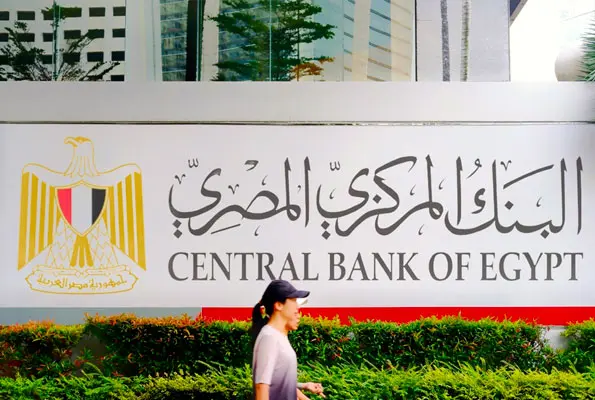
The net foreign assets (NFAs) in Egypt’s banking sector rose to approximately USD 22.903 billion, equivalent to EGP 1.229 trillion, in April 2026, up from USD 21.320 billion, or EGP 1.164 trillion, in March 2026, stated the Central Bank of Egypt (CBE).
The significance of the update can be gauged by the fact that net foreign assets are among the most important indicators of banking sector stability and resilience, reflecting the difference between foreign currency-denominated assets and liabilities held by the banking system.
“Total foreign assets held by Egypt’s banking sector—including the central bank and commercial banks—reached EGP 5.049 trillion in April, compared with EGP 4.921 trillion in March. Total foreign liabilities stood at EGP 3.820 trillion, up from EGP 3.756 trillion during the same period,” CBE noted.
The US dollar exchange rate, on the other hand, stood at EGP 54.6366 in March before easing to EGP 53.6663 in April.
Decoding the news, banking expert Shaimaa Wagih told the Daily News Egypt that net foreign assets represent the difference between banks’ foreign currency assets—such as deposits, securities, and reserves—and their foreign currency liabilities.
“Positive NFAs indicate that the banking sector holds a surplus of foreign currency assets over its obligations, providing a strong signal of banks’ ability to meet market demand for foreign currencies without creating additional pressures,” she remarked.
“The increase in NFAs enhances the central bank’s capacity to intervene flexibly in the foreign exchange market, helping to shield the Egyptian pound from sharp fluctuations and support exchange-rate stability over the medium term,” Wagih remarked.
She further added that stronger foreign asset positions also improve banks’ ability to finance the real economy while maintaining adequate foreign currency buffers. This tailwind also enables lenders to extend foreign currency financing to export-orientated businesses and investment projects, supporting export growth, apart from creating new investment opportunities and reducing dependence on costly external borrowing.
As per Wagih, the rise in NFAs not only strengthens Egypt’s ability to meet its international obligations but also enhances the North African country’s attractiveness to foreign direct investment (FDI), reinforcing its position as a stable financial destination in the region.
“The improvement also supports liquidity and financial flexibility, as a larger foreign currency surplus provides banks with greater capacity to manage liquidity, meet customer demand, and mitigate pressures on the banking sector during periods of economic volatility or unexpected external shocks,” she concluded.