

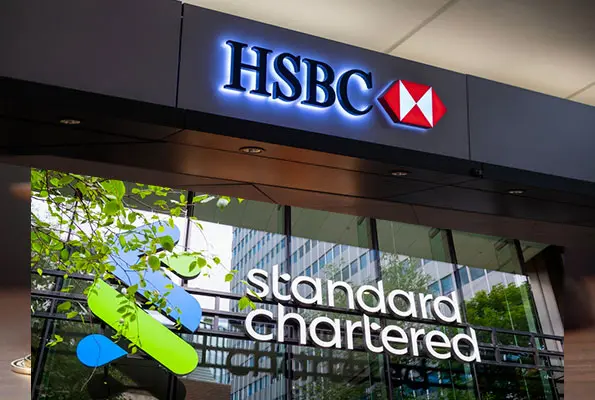
HSBC and Standard Chartered on Wednesday, August 19, announced the successful completion of bank-to-bank tokenised deposit interoperability through the execution of the first live cross-border transaction on Swift’s blockchain-based ledger.
This is an important step for banks using tokenised deposits to issue, transfer, record, and settle these deposits through Swift’s blockchain-based ledger, showing that banks can work together and helping to improve cross-border payments available on a 24/7 basis.
The live transaction builds on Swift’s July 2026 announcement that its blockchain-based ledger was ready for initial use, with 17 banks across six continents preparing to pilot live transactions using tokenised deposits for 24/7 payment availability and better liquidity efficiency. Today’s announcement represents the first interbank transaction executed on Swift’s ledger.
The transaction was conducted through the exchange of payment messages between HSBC and Standard Chartered using SWIFT’s ledger. The resulting obligations were recorded as tokenised deposit obligations on both HSBC’s Tokenised Deposit Service (TDS) and Standard Chartered’s tokenised-deposit infrastructure. Swift’s blockchain-based ledger served as a secure system that helped the two banks match and balance their obligations before completing the final payment using their usual methods.
For clients, the arrangement highlights the potential for cross-border payments to better support an increasingly 24/7 global economy.
Lewis Sun, Head of Digital Currencies, HSBC, said, “HSBC’s interoperability transaction with Standard Chartered via Swift is a landmark moment for the promise of tokenised deposits. It demonstrates how digital money issued by banks can be interoperable across institutions while maintaining the integrity and regulatory oversight of the existing financial ecosystem.”
“Tokenised deposit interoperability underscores how we can bring together different infrastructures to benefit our clients. For corporates, this initiative is about solving real-world challenges, such as moving liquidity around the world, across financial institutions, increasing cash visibility and reducing the complexities sometimes associated with traditional cross-border transactions,” the senior official added further.
Mark Willis, Head of Emerging Payments, Transaction Services and Digital Assets at Standard Chartered, remarked, “Tokenised deposits are a key pillar of Standard Chartered’s digital assets strategy, which aims to build end-to-end solutions that enable our clients to transact, settle and manage tokenised liquidity and value across borders. We are pleased to partner with HSBC in executing the first live transaction on Swift’s blockchain-based ledger, marking an important step towards more seamless, always-on financial services. As institutional demand grows for faster, more efficient ways to move liquidity and optimise working capital increase, interoperable tokenised deposits will play an increasingly important role in helping corporate and institutional clients manage treasury, unlock operational efficiencies and support real-time liquidity management across markets.”
“This transaction is part of a broader industry effort for distributed ledger technology to support real-world payment use cases at scale while preserving the role of regulated bank money,” he concluded.